الوضع الليلي


 11:46:22
  2025-05-24
  2143
2143
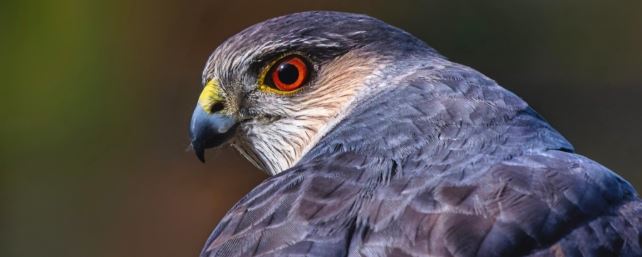
A hawk in New Jersey has been seen using a clever, urban hunting strategy: taking sound cues from traffic signals to exploit cars for cover, before striking prey.
The hawk first crossed paths with zoologist Vladimir Dinets on a crisp, late-Autumn morning in West Orange, New Jersey. Dinets was stopped at a traffic light on the way to drop his daughter off at school, and the raptor, a young Cooper's hawk, was on the hunt for breakfast.
After a few more mornings caught at this red light, watching the hawk in action, Dinets began to figure out its technique: it was waiting for the sound of the pedestrian crossing before making its move.
"It emerged from that small tree, flew very low above the sidewalk along the line of cars, made a sharp turn, crossed the street between the cars, and dove onto something near one of the houses," Dinets describes in an editorial for Frontiers in Ethology.
"It turned out that the house targeted by the hawk's attacks was inhabited by a nice, big family that liked to eat dinner in the front yard. Next morning, their breadcrumbs and other leftovers attracted a small flock of birds – sparrows, doves, and sometimes starlings. That's what the hawk was after."
Birds of prey are an uncommon, but not unheard-of, sight in the city, and Dinets suspected this one was new in town: most hawks that come to urban areas like West Orange for the winter come from forested breeding and nesting grounds in search of food.
The Cooper's hawk is an agile stealth hunter, capable of tight swerves and rapid acceleration to catch prey. These skills make it a formidable predator in its natural habitat, where it will use the cover of a forest or woodland edge to patrol adjacent open spaces, before launching a sneak attack on exposed prey.
"To hunt this way, they must be able to plan ahead, to know and understand the prey's behavior, particularly its movement patterns, and to be highly observant – in short, they need remarkable cognitive abilities," Dinets writes.
He was fascinated to see the city-dwelling hawk adapt this strategy for an environment where coverage from cars comes and goes depending on the red light. He returned to the intersection to stake out the bird 18 times that winter, parking his car on the street as a kind of mobile bird hide.
"The hawk always showed up at the starting point of his attack route when the sound signal for the pedestrian crossing went on… but before the car queue actually formed," Dinets told ScienceAlert. "The probability of that happening by chance was very close to zero."
On weekends, there were no car queues, and no Cooper's hawk to be seen. On rainy days, the neighborhood family would not eat dinner outside, and the next morning, there was no flock, and again, no hawk. Many factors, it seemed, had to line up for the hawk to make a perfect attack.
"The sound signal meant that the red light would last longer, so the queue of cars waiting for the green light would be long enough to provide the hawk with cover for the entire approach to the place where his prey was feeding," Dinets explained.
Without that pedestrian crossing sound, the hawk seemed to know not to bother. This cue guaranteed the hawk could swoop low along the footpath, concealed by the backed-up traffic, before making a 90-degree turn across the street to plunge into the feeding flock of prey.
Dinets couldn't actually see the climax of these attacks from his makeshift hide, but once, he saw the hawk fly off with a house sparrow in its talons, and on another occasion, he saw it eating a mourning dove on the ground nearby.
"It shows the ability to understand connections between events and to plan in advance," Dinets said. "It also shows that they have a mental map of their hunting area and know it intimately, so they don't need to see their prey to know where it is and how best to sneak up on it."
Few other scientific observations capture these abilities, probably because it's so difficult to watch these stealth hunters at work in their natural environment.
"A city is a difficult and very dangerous habitat for any bird, but particularly for a large raptor specializing in live prey: you have to avoid windows, cars, utility wires, and countless other dangers while catching something to eat every day," Dinets writes in his editorial. "I think my observations show that Cooper's hawks manage to survive and thrive there, at least in part, by being very smart."
Reality Of Islam |
|
A study of

Researchers
MIT enginee
 9:3:43
2018-11-05
9:3:43
2018-11-05
10 benefits of Marriage in Islam
7:5:22
2019-04-08
benefits of reciting surat yunus, hud &
9:45:7
2018-12-24
advantages & disadvantages of divorce
11:35:12
2018-06-10
6:0:51
2018-10-16
10:47:11
2022-11-22
9:39:36
2022-12-28
8:21:9
2018-06-21
bahlool & the throne of haroun rashid
8:20:35
2018-06-21
9:30:2
2021-11-12
8:19:41
2018-06-21
a hero waters thirsty wild animals
9:4:9
2022-01-06
5:41:46
2023-03-18
| LATEST |
 HOME
HOME