الوضع الليلي


 1:29:24
  2026-10-10
  14
14
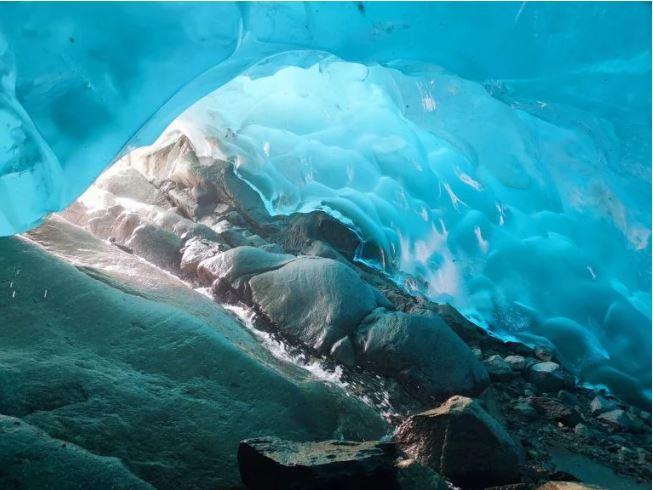
Switzerland’s glaciers lost more than 5 percent of their ice in a single year, with record melt, disappearing glaciers, and nearly one-fifth of the country’s glacier volume now gone in just five years.
By September, bare glacier ice stretched across parts of the Swiss Alps where snow should still have been shielding the surface from the summer sun. Even at 3,500 meters, or about 11,500 feet, the seasonal snow cover had vanished, exposing the darker ice beneath and allowing it to absorb more heat. After an unusually snow-poor winter and months of hot, dry weather, Switzerland’s glaciers lost more than 5 percent of their total ice volume in 2026.
Across the country, researchers with GLAMOS, the Swiss Glacier Monitoring Network, tracked the losses as part of their long-term monitoring program. The network, headquartered at ETH Zurich and the universities of Fribourg and Zurich, provided the measurements for the annual glacier report from the Swiss Academy of Sciences. Although Switzerland did not quite match the extraordinary melt rates recorded in 2022, the measurements showed another year of severe ice loss.
Record melt reaches major glaciers
Meters of ice vanished from glacier surfaces over the course of a single season. Average glacier thickness fell by roughly 2.5 to 4 meters, or about 8 to 13 feet, while some glacier tongues lost as much as 10 meters, or roughly 33 feet. The Rhône, Aletsch, and Clariden glaciers were among those that experienced their greatest melt on record in 2026.
Several smaller glaciers did not survive the season at all. Bella Tola in the canton of Valais and Griessfirn in the canton of Glarus disappeared completely and permanently. Their loss reflects a much larger retreat unfolding across the Swiss Alps, where nearly 20 percent of the country’s remaining glacier volume has disappeared in just the past five years.
A snow-starved winter set the stage
Winter had already left the glaciers vulnerable before the main melt season began. The winter of 2025 to 2026 ranked among Switzerland’s ten least snowy since measurements began, leaving less snow available to insulate glacier ice during the warmer months.
Hot, dry conditions then persisted from May through September, driving heavy melting even at elevations that usually remain cold enough to preserve snow and ice.
For 76 days, summer heatwaves pushed the freezing level above 4,000 meters, or about 13,100 feet. That was more than twice the average duration and a record for Switzerland. With temperatures remaining above freezing so high in the mountains, melting reached areas that would normally retain snow well into the season.
Meltwater brings a shrinking reprieve
Between July and September, that melting released about 2,200 billion liters of water from Swiss glaciers. The volume was more than four times the amount of drinking water used by Swiss households in an entire year, temporarily helping ease summer water shortages. Yet the same runoff carries a warning: every unusually large pulse of meltwater comes from ice that will not quickly return.
As autumn reached the high Alps, the exposed glacier surfaces left behind by the vanished snow told the larger story. Meltwater can temporarily fill rivers and reservoirs during hot summers, but the frozen reserve feeding that water is steadily shrinking, leaving Switzerland with less glacier ice available to melt the next time the mountains face another season like 2026.
Reality Of Islam |
|

Researchers

MIT enginee

Scientists
 9:3:43
2018-11-05
9:3:43
2018-11-05
10 benefits of Marriage in Islam
7:5:22
2019-04-08
benefits of reciting surat yunus, hud &
9:45:7
2018-12-24
advantages & disadvantages of divorce
11:35:12
2018-06-10
6:0:51
2018-10-16
2:34:48
2022-01-18
10:35:40
2022-05-26
8:4:21
2022-01-08
a hero waters thirsty wild animals
9:4:9
2022-01-06
the happy life of mankind requirement
6:36:36
2022-01-25
al-hussain (peace be upon him)
10:18:1
2022-09-21
8:30:23
2022-03-03
5:41:46
2023-03-18
| LATEST |
 HOME
HOME