الوضع الليلي


 1:59:39
  2024-08-19
  2187
2187
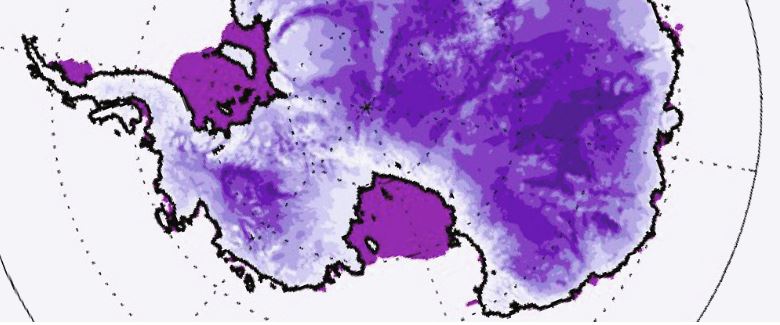
Antarctica is shedding weight, allowing the continent to rise from the ocean somewhat like a once-squished sponge now free to expand again.
That weight is its ice.
The process is called post-glacial uplift, and new research suggests it will have a massive impact on future global sea level rise. It could reduce Antarctica's contribution by up to 40 percent, or it could make things far worse, depending on how much heat-trapping, ice-melting fossil fuels we continue to let loose.
"With nearly 700 million people living in coastal areas and the potential cost of sea-level rise reaching trillions of dollars by the end of the century, understanding the domino effect of Antarctic ice melt is crucial," says McGill University glaciologist Natalya Gomez.
And in the last few years, Antarctic ice has remained stubbornly low.
Gomez and colleagues examined Earth's mantle beneath the Antarctic ice sheet and found it particularly squishy in some key areas. The seismic data revealed that this high level of viscosity is creating the unexpectedly fast rise of the land.
"Our measurements show that the solid earth that forms the base of the Antarctic ice sheet is changing shape surprisingly quickly," says Ohio State University geologist Terry Wilson.
"The land uplift from reduced ice on the surface is happening in decades, rather than over thousands of years."
The team then used 3D modeling to simulate sea level rise due to Antarctica's changing landmass across different scenarios. If warming levels are kept low, it contributes to sea levels gaining up to 1.7 meters (5.6 feet) by 2500, but this blows out to as high as 19.5 meters if we continue to allow global warming to increase unabated.
This is because when the ice sheet retreat outpaces the uplift, more water ends up being expelled into the oceans. But if we manage to slow down this melt, the rising land will lift some of the ice away from warmer ocean waters, allowing it to be preserved for longer.
"This study marks a breakthrough in our ability to better predict the impacts of climate change on rising seas and to inform effective environmental policy," says University of Massachusetts glaciologist Rob DeConto.
As Earth is not a perfectly smooth sphere, different parts of our planet will experience unique sea level impacts thanks to gravitational, rotational, and geological quirks.
"Our results further support recent findings that low-latitude islands and coastal sites already being affected by sea level rise will experience higher than average sea level rise associated with Antarctic ice loss, regardless of the ice loss scenario," Gomez and team explains.
"This finding highlights the climate injustice toward nations whose emissions are low, while their exposure and vulnerability to sea level rise is high."
There is still a lot of uncertainty in the model, the researchers caution, particularly due to the lack of seismic data from West Antarctica. And these estimates don't even factor in what's happening with the ice in Greenland and the world's mountains.
"To document how fast our world is changing, it's very important to continue advancing our ability to make predictions that are more certain, which is the only path that will allow us to tend to our future in a meaningful way," explains Wilson.
Rising sea levels are already impacting low-lying islands like those in Kiribati. Most of South Tarawa is less than 3 meters above sea level, where villagers in Temaiku have been trying to hold back the ocean with sandbags, only for them to be washed away earlier this year, flooding homes, and tainting crop soils and water wells with salt.
Meanwhile, wetlands are trapped between rising water and human infrastructure like roads. Losing these ecosystems, which filter water and control erosion, will mean greater sea level rises will hit these areas even harder.
"Reducing greenhouse gas emissions will allow the rebound of the solid Earth to play a greater role in preserving more of the Antarctic ice sheets and avoiding the worst and most inequitable impacts of future climate change on global coastlines," Gomez and colleagues conclude.
Reality Of Islam |
|

A study of

Researchers

MIT enginee
 9:3:43
2018-11-05
9:3:43
2018-11-05
10 benefits of Marriage in Islam
7:5:22
2019-04-08
benefits of reciting surat yunus, hud &
9:45:7
2018-12-24
advantages & disadvantages of divorce
11:35:12
2018-06-10
6:0:51
2018-10-16
7:59:14
2018-06-21
7:26:19
2022-04-08
9:30:2
2021-11-12
11:34:48
2022-06-29
1:34:8
2022-02-01
bahlool & the throne of haroun rashid
8:20:35
2018-06-21
5:58:12
2021-12-18
5:41:46
2023-03-18
| LATEST |
 HOME
HOME