الوضع الليلي


 3:55:21
  2024-08-10
  1998
1998
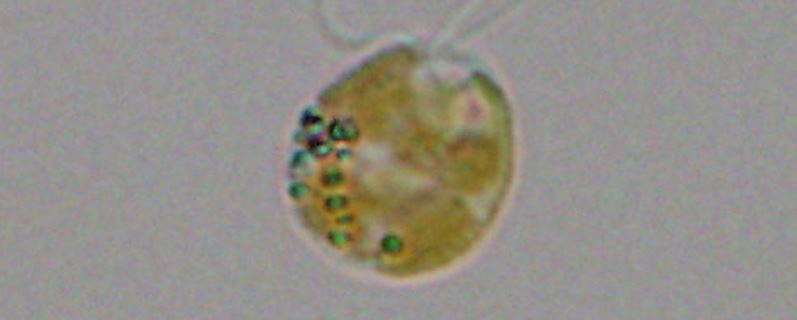
The largest protein ever found in biology has been discovered in a species of marine algae. Dubbed the 'Mount Everest' of proteins, it plays a significant role in the death of fish during algal blooms.
Made by Prymnesium parvum (or golden algae), the toxin-producing protein has been dubbed PKZILLA-1 by the US team of scientists who found it, in tribute to a certain reptilian monster known for its gigantic size.
Investigation of how P. parvum builds its toxin has also revealed previously unknown ways of synthesizing compounds, which could lead to the creation of new medicines and materials.
Consisting of a mind-blowing 45,212 amino acids, the PKZILLA-1 protein far surpasses the roughly 30,000 or so amino acids making up the previous record-holding protein, titin, found in human muscles. By comparison, the more averagely-sized protein hemoglobin has a mere 574 amino acids.
While we're still talking microscopic size, suddenly our biological scales need adjusting.
"This expands our sense of what biology is capable of," says marine chemist Bradley Moore, from the Scripps Institution of Oceanography in California.
P. parvum can cause fatal damage to the gills of fish, and scientists are still trying to figure out how the tiny single-celled organisms make large complex molecules. Moore and his colleagues used advanced genetic analysis techniques to look at how the algae produce their prymnesium toxin.
That led them first to two unusually large genes that create PKZILLA-1 as well as the smaller PKZILLA-2, and then to the proteins themselves: enzymes that kick off the production of prymnesin, through a lengthy process of chemical reactions that the scientists recorded in detail.
"We were able to locate the genes, and it turned out that to make giant toxic molecules this alga uses giant genes," says Vikram Shende, from the Scripps Institution of Oceanography.
This new knowledge means that scientists are in a better place when it comes to stopping harmful algal blooms involving P. parvum. These algae are found all over the world, and can cause significant disruption to aquatic ecosystems.
While alga is an important part of marine life, when it collects in masse – often prompted by warming waters or pollution from human activity – the effects can be devastating, as poisons are added to the water and oxygen is sucked out.
Here, the gene discovery is particularly significant, because it could enable us to detect toxic production before it starts. Water could be tested for the presence of PKZILLA genes in a similar way to COVI-19 testing.
The team behind the research thinks the gene approach used here could potentially be used to identify other algal toxins. Not only that, the strategies for assembling chemicals that the new study discovered could be useful in the development of new medicines and materials.
"Understanding how nature has evolved its chemical wizardry gives us as scientific practitioners the ability to apply those insights to creating useful products, whether it's a new anti- cancer drug or a new fabric," says Moore.
Reality Of Islam |
|
A study of

Researchers
MIT enginee
 9:3:43
2018-11-05
9:3:43
2018-11-05
10 benefits of Marriage in Islam
7:5:22
2019-04-08
benefits of reciting surat yunus, hud &
9:45:7
2018-12-24
advantages & disadvantages of divorce
11:35:12
2018-06-10
6:0:51
2018-10-16
9:50:37
2023-02-28
11:34:48
2022-06-29
7:59:14
2018-06-21
7:34:7
2023-02-28
2:42:26
2023-02-02
4:2:19
2022-10-10
8:39:51
2022-09-23
5:41:46
2023-03-18
| LATEST |
 HOME
HOME