الوضع الليلي


 11:8:13
  2026-02-23
  1491
1491
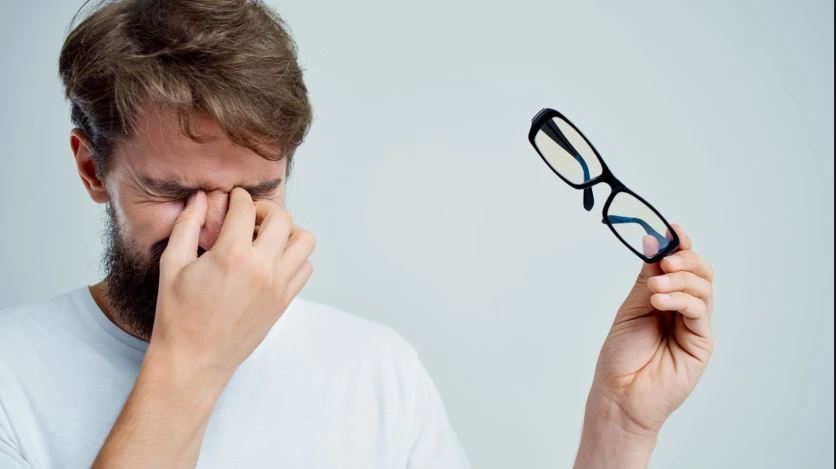
For many years, the sharp rise in myopia — or nearsightedness — has largely been blamed on growing screen use, especially among children and young adults. However, researchers at the SUNY College of Optometry say the explanation may be more complex — and tied to everyday visual behavior. In a study set to be published in Cell Reports, the team suggests that myopia may be driven less by screens themselves and more by extended close-up focusing indoors under dim lighting, which reduces the amount of light that reaches the retina.
“Myopia has reached near-epidemic levels worldwide, yet we still don’t fully understand why,” said Jose-Manuel Alonso, MD, PhD, SUNY Distinguished Professor and senior author of the study. “Our findings suggest that a common underlying factor may be how much light reaches the retina during sustained near work — particularly indoors.”
Myopia Rates Continue to Climb Worldwide
Myopia (nearsightedness) makes distant objects appear blurry and is now considered a global epidemic. It affects nearly 50 percent of young adults in the United States and Europe and close to 90 percent in parts of East Asia. While genetics influences risk, the rapid increase over just a few generations strongly suggests that environmental factors also play a major role.
In research settings, myopia can be triggered in animal models through visual deprivation or the use of negative lenses, and scientists believe these methods involve different neuronal mechanisms. Eye care professionals also slow myopia progression using multiple strategies that likely work through separate pathways (multifocal lenses, ophthalmic atropine, contrast-reduction, promoting time outdoors, and others). Investigators at the State University of New York (SUNY) College of Optometry now propose that a single neuronal mechanism may help explain both how myopia develops and how it can be controlled.
Movie demonstrating the increase in accommodative eye vergence and pupil constriction when the fixating eye (left side of image, right eye of subject) is exposed to -5D defocus. The occluded eye (right side of image, left eye of subject) turns inward as if the stimulus was approaching the subject and the pupils constrict in both eyes. Both eyes are visible in the movie because they are both being recorded with Tobii glasses. When defocus is perceived by the fixating eye, the accommodation power of the crystalline lens increases to focus the stimulus. This increase in accommodation is accompanied by an increase in eye vergence and pupil constriction. Credit: Alonso Lab at SUNY Optometry
A Unifying Hypothesis About Light and Eye Focus
The new theory aims to solve a long-standing question in vision science: why do such varied factors, including near work, dim indoor lighting, atropine drops, multifocal lenses, and time spent outdoors, all appear to influence myopia progression?
“In bright outdoor light, the pupil constricts to protect the eye while still allowing ample light to reach the retina,” explains Urusha Maharjan, SUNY Optometry doctoral student who conducted the study. “When people focus on close objects indoors, such as phones, tablets, or books, the pupil can also constrict, not because of brightness, but to sharpen the image. In dim lighting, this combination may significantly reduce retinal illumination.”
According to this proposed mechanism, myopia may develop when reduced retinal illumination fails to produce strong retinal activity because lighting is too dim and pupil constriction becomes excessive at short viewing distances. In contrast, when the eye is exposed to bright light, pupil constriction is controlled by image brightness rather than viewing distance, and myopia does not develop under those conditions.
How Accommodation and Negative Lenses Affect Retinal Illumination
The study also shows that negative lenses decrease retinal illumination by narrowing the pupil through accommodation (i.e., an accommodative increase in the lens power of the eye when focusing images at short distances). This pupil constriction intensifies when the viewing distance is shortened or when excessively strong negative lenses are worn. It becomes even stronger when accommodation is sustained for prolonged periods (e.g., tens of minutes) and increases further once the eye has already become myopic. Researchers also identified additional myopia-related disruptions in eye turning during accommodation and reduced effectiveness of eye blinks in triggering pupil constriction.
Implications for Myopia Prevention and Control
If confirmed, this mechanism could significantly change how experts approach myopia progression and treatment. The theory suggests that myopia may be controlled by ensuring exposure to safe bright light while limiting accommodative pupil constriction. That reduction can be achieved by lowering accommodative demand with lenses (multifocal or contrast-reduction), directly blocking the muscles responsible for pupil constriction (atropine drops), or spending time outdoors without engaging accommodation (looking at far distances).
The researchers also predict that any strategy to control myopia may be less effective if individuals continue prolonged close-up focusing indoors under low light conditions.
“This is not a final answer,” Alonso emphasized. “But the study offers a testable hypothesis that reframes how visual habits, lighting, and eye focusing interact. It’s a hypothesis grounded in measurable physiology that brings together many pieces of existing evidence. More research is needed, but it gives us a new way to think about prevention and treatment.”
Reality Of Islam |
|
MIT enginee
Scientists

Researchers
 9:3:43
2018-11-05
9:3:43
2018-11-05
10 benefits of Marriage in Islam
7:5:22
2019-04-08
benefits of reciting surat yunus, hud &
9:45:7
2018-12-24
advantages & disadvantages of divorce
11:35:12
2018-06-10
6:0:51
2018-10-16
8:25:12
2022-03-09
the happy life of mankind requirement
6:36:36
2022-01-25
9:50:37
2023-02-28
10:43:56
2022-06-22
2:2:13
2022-10-08
a hero waters thirsty wild animals
9:4:9
2022-01-06
2:33:4
2023-02-15
5:41:46
2023-03-18
| LATEST |
 HOME
HOME