الوضع الليلي


 12:29:17
  2024-11-03
  2305
2305
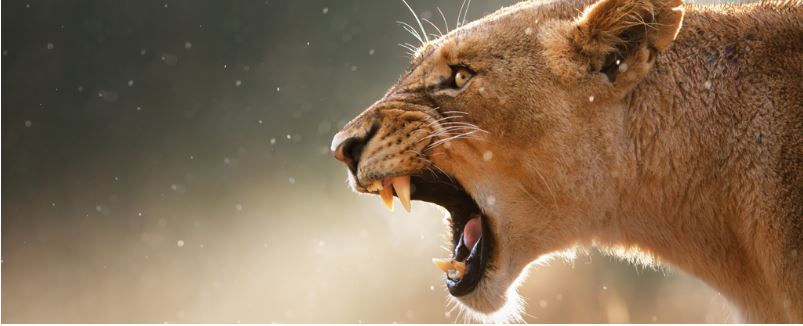
With their bladed paws, wielded by a rippling mass of pure muscle, sharp eyes, agile reflexes, and crushing fanged jaws, lions are certainly not a predator most animals have any interest in messing with. Especially seeing as they also have the smarts to hunt in packs.
"Lions are the biggest group-hunting land predator on the planet, and thus ought to be the scariest," conservation biologist Michael Clinchy from Western University in Canada said in 2023.
But in over 10,000 recordings of wildlife on the African savannah, 95 percent of the species observed responded with far more terror to the sound of an entirely different beast. This animal isn't even technically an apex predator. It's us: humans.
We're the monsters lurking under other mammals' beds.
"The fear of humans is ingrained and pervasive," said Clinchy. "There's this idea that the animals are going to habituate to humans if they're not hunted. But we've shown that this isn't the case."
In research published last year, Western University ecologist Liana Zanette and colleagues played a series of vocalizations and sounds to animals at waterholes in South Africa's Greater Kruger National Park and recorded their response.
This protected area is home to the world's largest remaining lion population, so the other mammals are well aware of the danger these carnivores represent.
The researchers broadcast the sounds of human conversations in local languages, including Tsonga, Northern Sotho, English, and Afrikaans, as well as the sounds of human hunting, including barking dogs and gunshots. They also played the sounds of lions communicating with each other.
"The key thing is that the lion vocalizations are of them snarling and growling, in 'conversation' as it were, not roaring at each other," said Clinchy. "That way the lion vocalizations are directly comparable to those of the humans speaking conversationally."
Not all of the experimental subjects appreciated the researchers' efforts though.
"One night, the lion recording made this elephant so angry that it charged and just smashed the whole thing," Zanette said, referring to the camera setup.
Seems like a fair response!
Almost all 19 of the mammal species observed in experiments were twice as likely to abandon the waterholes when hearing humans talking compared to lions or even hunting sounds. The mammals include rhinos, elephants, giraffes, leopards, hyenas, zebras, and warthogs, some of which can pose dangers in their own right.
But fear of these creatures rarely stops us from deciding their fate. From taking down massive mammoths to tending the most dangerous modern dinosaur we'll take on any challenge.
As the most lethal animal on the planet by far, humans have sadly earned every heart-racing beat of terror we instill in others.
"It was specifically hearing human vocalizations which inspired the greatest fear," the team explain in their paper, "suggesting that wildlife recognize humans as the real danger, whereas related disturbances such as barking dogs are merely lesser proxies."
Given how ubiquitous humans now are, escaping from us is only ever going to be a temporary situation, meaning that these mammals will unfortunately keep having their fears triggered.
This is not great for the already dwindling populations of many savannah species, including giraffes. As the team's previous research suggests, continued fear alone can reduce prey animal populations over generations.
But conservation biologists may be able to harness this knowledge to help these species, too. By playing human conversations in areas with known poaching in South Africa, they hope to keep the endangered Southern white rhino safely away.
"I think the pervasiveness of the fear throughout the savannah mammal community is a real testament to the environmental impact that humans have," said Zanette.
"Not just through habitat loss and climate change and species extinction, which is all important stuff. But just having us out there on that landscape is enough of a danger signal that they respond really strongly. They are scared to death of humans, way more than any other predator."
Reality Of Islam |
|

A study of

Researchers

MIT enginee
 9:3:43
2018-11-05
9:3:43
2018-11-05
10 benefits of Marriage in Islam
7:5:22
2019-04-08
benefits of reciting surat yunus, hud &
9:45:7
2018-12-24
advantages & disadvantages of divorce
11:35:12
2018-06-10
6:0:51
2018-10-16
8:39:51
2022-09-23
4:25:57
2023-02-11
8:19:41
2018-06-21
7:45:39
2018-06-21
2:2:13
2022-10-08
12:10:56
2022-11-17
3:18:29
2022-12-24
5:41:46
2023-03-18
| LATEST |
 HOME
HOME