الوضع الليلي


 4:11:51
  2024-06-26
  2350
2350
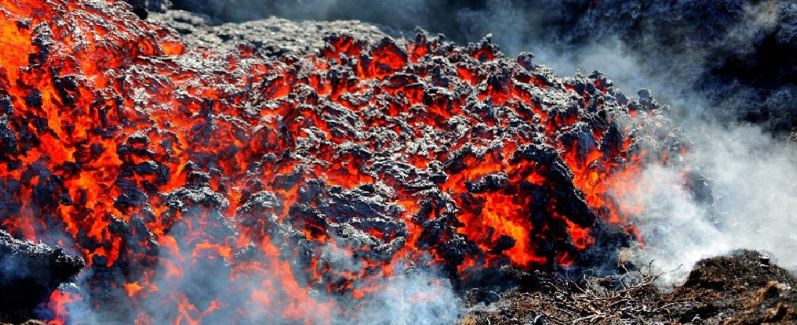
After almost 800 years of relative dormancy, volcanoes on Iceland's Reykjanes Peninsula are returning to life with renewed ferocity.
Eight eruptions have occurred since 2021 and new research suggests the upsurge in volcanic activity stems from a shallow pool of magma just 10 kilometers (6.2 miles) wide and only 9-12 kilometers below the surface.
Alerting authorities to this magma source is critical for the ongoing safety of residents in the region, with researchers claiming the magma pool could feed similarly-sized volcanic eruptions in the area for years or maybe decades more.
"A comparison of [current] eruptions with historical events provides strong evidence that Iceland will have to prepare and be ready for this volcanic episode to continue for some time, possibly even years to decades," says geologist Valentin Troll of Uppsala University in Sweden, who led the study.
Troll and his colleagues used seismic wave data from volcanic eruptions and earthquake swarms to map the subsurface of the Reykjanes Peninsula in southwest Iceland, which is home to most of the country's population.
They found the 2021 eruptions of the Fagradalsfjall volcanic system were fed by a pocket of magma that then oozed along geological lines to Sundhnúkur, where volcanoes have been spewing lava since late 2023.
With both eruption zones expelling lavas with similar geochemical 'fingerprints', the findings suggest a "connected magma plumbing system" joins the two volcanic systems.
Historical data indicates this shared magma pool likely formed sometime between 2002 and 2020, was recharged again in 2023, and continues to supply magma from shallow depths to surface fissures and vents via slightly sloped pathways. Melting rock deeper in the mantle replenishes the magma pool, so it may fuel eruptions for decades to come.
"There is a need for an improved understanding of the magma supply system that feeds the ongoing eruptive events," Troll and colleagues write in their published paper.
"Increased eruption frequencies should be expected for the foreseeable future."
Now that the magma pool has been identified, it can be mapped and monitored to prepare communities for what might eventuate.
Repeated evacuations would be an obvious but very necessary disruption to ensure people's safety. Frequent eruptions may also damage key infrastructure such as geothermal power plants that supply Iceland with electricity and heat, and experimental carbon sequestration facilities, injecting carbon dioxide (CO2) and other gaseous pollutants into porous rocks.
Sitting atop the Mid-Atlantic Ridge, the tectonic plate boundary pushing North America and Eurasia apart, Iceland is no stranger to volcanic eruptions.
But the past three years of eruptions have been particularly disruptive and could, potentially, mark the beginning of a lengthy period of persistent volcanic eruptions for the country. Nature is rarely predictable, however, so the researchers are calling for continued monitoring of the area.
"We don't know how long and how frequently it will continue for the next ten or even hundred years," says study author Ilya Bindeman, a volcanologist at the University of Oregon.
"A pattern will emerge, but nature always has exceptions and irregularities."
Reality Of Islam |
|
Keeping sil
Two experim
Changing a
Plants are
 9:3:43
2018-11-05
9:3:43
2018-11-05
10 benefits of Marriage in Islam
7:5:22
2019-04-08
benefits of reciting surat yunus, hud &
9:45:7
2018-12-24
advantages & disadvantages of divorce
11:35:12
2018-06-10
6:0:51
2018-10-16
2:13:43
2022-05-27
2:11:12
2022-10-15
8:19:41
2018-06-21
8:4:21
2022-01-08
allah will not answer all your prayers
6:56:28
2022-01-01
9:50:37
2023-02-28
9:39:36
2022-12-28
5:41:46
2023-03-18
| LATEST |
 HOME
HOME