الوضع الليلي


 3:4:28
  2023-09-20
  1580
1580
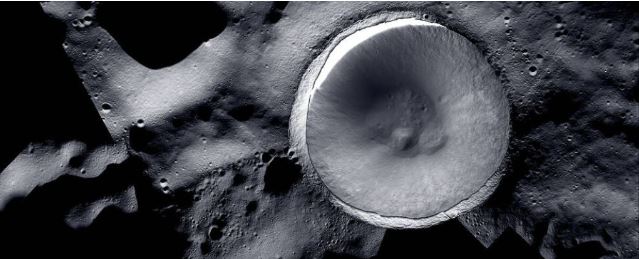
A flawless new image from NASA using a clever mix of photographs from two different cameras has captured a crater on the moon that has not seen the light of day for billions of years.
The ancient pockmark, known as Shackleton Crater, is located in a mountainous part of the lunar South Pole, where, due to the tilt of the Moon, only the highest ridges and peaks are illuminated by sunlight.
The rest of the region exists mostly in shadow, creating 'cold traps' where water or ice can potentially hide from the Sun… and from the curious eyes of astronomers.
It's an unexplored world that experts are desperate to know more about, especially as it seems like a fitting spot for water to exist in the form of ice.
The dark middle of Shackleton Crater hosts extremely cold temperatures that do not exceed −173 °C (or −280 °F). If the area contains water vapor from an ancient comet crash, it is now frozen, probably beneath the surface, away from sight.
Astronomers in China plan to send a mini flying probe to the crater in 2026 to drill for evidence of lunar water-ice. In the meantime, NASA is relying on 'night goggles' to peer into the perpetual darkness.
The specially designed device is known as ShadowCam, and it was launched into orbit on a Korean lunar satellite in August of.
The first images are now being shared, and it's giving the Earthly world an unprecedented view of our neighboring satellite.
ShadowCam is over 200 times more sensitive to light in shadowed regions than other lunar cameras. It images the dark surface by relying on earthshine, which is a reflection of light from our planet that illuminates the Moon. The camera also uses the reflection of sunlight from mountains and ridges on the Moon itself.
Unfortunately the design results in over-saturation when imaging bright regions.
Earlier this year, for instance, scientists at NASA tried to use ShadowCam to capture Shackleton Crater, which only has three points that see sunlight about 90 percent of the year. These sunlit parts were ultimately whited out, as can be seen below.
The ShadowCam team has now accounted for this loss of detail by creating an image mosaic.
When the oversaturated, sunlit regions from ShadowCam are replaced with photographs from other lunar cameras in orbit, the whole scene can be captured in breathtaking detail like never before.
"With each camera optimized for specific lighting conditions found near the lunar poles, analysts can combine images from both instruments to create a comprehensive visual map of the terrain and geologic features of both the brightest and darkest parts of the Moon," reads a press release from NASA.
Now to see where ShadowCam turns its gaze next…
Reality Of Islam |
|

Keeping sil
Two experim
Changing a
Plants are
 9:3:43
2018-11-05
9:3:43
2018-11-05
10 benefits of Marriage in Islam
7:5:22
2019-04-08
benefits of reciting surat yunus, hud &
9:45:7
2018-12-24
advantages & disadvantages of divorce
11:35:12
2018-06-10
6:0:51
2018-10-16
3:42:22
2021-12-24
a hero waters thirsty wild animals
9:4:9
2022-01-06
2:33:4
2023-02-15
6:0:8
2023-03-19
2:13:43
2022-05-27
6:28:21
2022-12-20
8:25:12
2022-03-09
5:41:46
2023-03-18
| LATEST |
 HOME
HOME