الوضع الليلي


 6:28:38
 2019-09-03
 2063
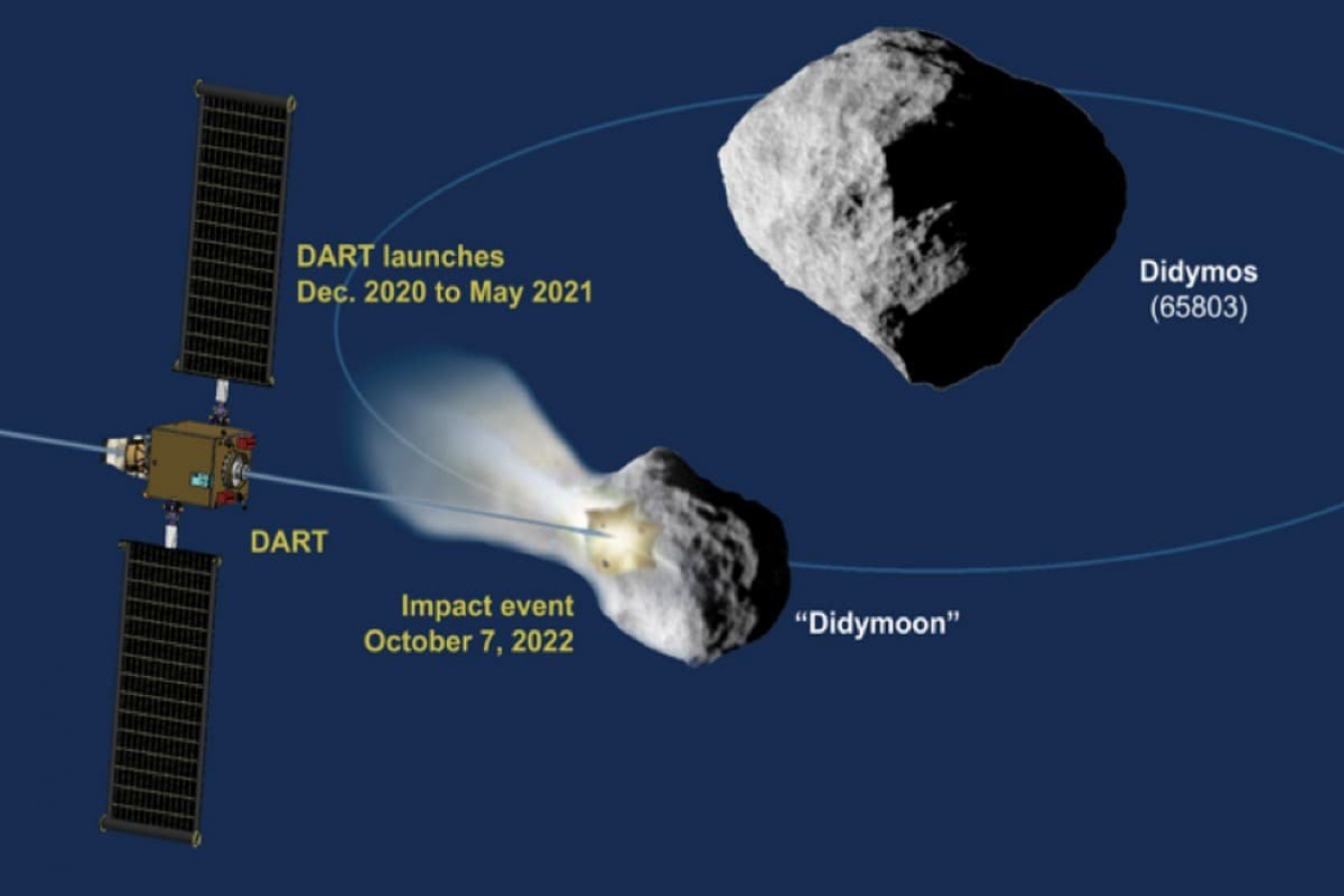
Researchers from the US, Europe, and around the world are coming together to discuss a mission to deflect an asteroid in space and to prove the technique to be an effective method of defence against a looming asteroid collision. National Aeronautics and Space Administration (NASA) and European Space Agency (ESA) asteroid researchers and spacecraft engineers, along with other researchers from around the world will meet in Rome from September 11 to September 13 and check the progress in the mission which is known as Asteroid Impact Deflection Assessment (AIDA).
This mission aims to deflect the smaller part of a double asteroid dubbed Didymos. For this purpose, a spacecraft will be made to crash into the asteroid and later, another spacecraft will reach the asteroid to study the crash site and gather necessary data on effects of the collision, according to ESA.
During the three-day International AIDA Workshop in Rome, the participants will share progress on the two spacecrafts, Double Asteroid Impact Test (DART) by NASA, and Hera by ESA. DART will collide with the asteroid at speed of 6.6km per second in September 2022. An Italian satellite called Light Italian CubeSat for Imaging of Asteroids (LICIACube) will travel along with DART to monitor the impact. After this, Hera will perform “close-up survey of the post-impact asteroid, acquiring measurements such as the asteroid's mass and detailed crater shape”. The results provided by Hera will help ascertain the effectiveness of the collision and verify if this experiment can actually be used as a reliable method to dissipate a real threat. Hera will be launched in October 2024 and will reach the asteroid after about two years.
“DART can perform its mission without Hera – the effect of its impact on the asteroid's orbit will be measurable using Earth ground-based observatories alone,” said Ian Carnelli, who is managing the Hera mission.
“But flying the two missions together will greatly magnify their overall knowledge return. Hera will in fact gather essential data to turn this one-off experiment into an asteroid deflection technique applicable to other asteroids. Hera will also be the first mission to rendezvous with a binary asteroid system, a mysterious class of object believed to make up around 15 percent of all known asteroids.
“And our mission will test a variety of important new technologies, including deep space CubeSats, inter-satellite links and autonomous image-based navigation techniques, while also providing us with valuable experience of low-gravity operations,” added Carnelli.
The main body of Didymos asteroid is about 780 metres wide, with its moonlet about 160 metres in diameter, roughly the size of the Great Pyramid of Egypt.
In its release, ESA said Didymos was carefully selected. "Due to the relatively small mass and gravities of these bodies, the smaller asteroid orbits its parent at a comparatively low velocity of a few centimetres per second, making it feasible to shift its orbit in a measurable way – something which would not be achievable so precisely with a lone asteroid in a much more rapidly moving solar orbit," ESA explained.
Reality Of Islam |
|

Keeping sil
Two experim
Changing a
Plants are
 9:3:43
2018-11-05
10 benefits of Marriage in Islam
7:5:22
2019-04-08
benefits of reciting surat yunus, hud &
9:45:7
2018-12-24
advantages & disadvantages of divorce
11:35:12
2018-06-10
6:0:51
2018-10-16
6:28:21
2022-12-20
allah will not answer all your prayers
6:56:28
2022-01-01
8:3:0
2018-06-21
5:58:12
2021-12-18
8:21:9
2018-06-21
12:47:1
2022-12-20
7:45:39
2018-06-21
5:41:46
2023-03-18
| LATEST |
 HOME