الوضع الليلي


 8:2:58
  2024-05-27
  2095
2095
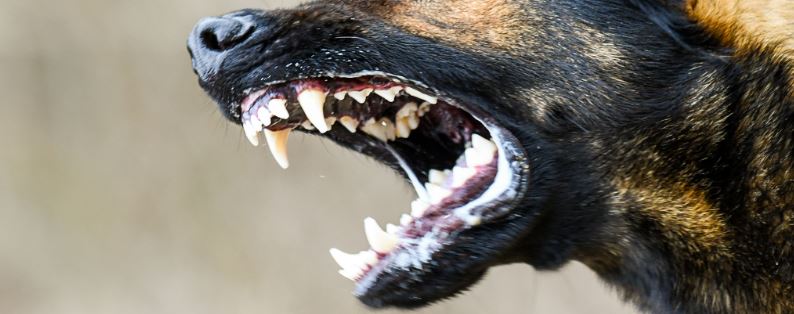
Mammals likely have as diverse a set of opinions as they have variety in their physical forms, but there may be one thing they can all agree on: humans are their greatest fear.
Multiple studies in the Northern Hemisphere show the sound of our voices evokes more terror than other apex predators and now new research in the Southern Hemisphere reaches the same conclusion.
Australian marsupials studied in Tasmania were at least 2.4 times more likely to flee from human voices than the sound of any other predator considered.
"Wildlife worldwide evidently recognize that it is humans who are the largest source of danger," University of Tasmania ecologist Katherine McGann and colleagues write in their paper.
And they're not wrong.
From exploiting more than 300 times more vertebrate species than comparable predators, to our global scale ecological destruction, we humans are by far the most lethal mammals on the planet.
Last year researchers discovered mammals on the African savannah fear the sound of humans even more than lions, so McGann and team were keen to see if our voices also provoked the most fear in mammals that haven't evolved alongside many large predators.
Australian marsupials are considered predator-naive because some have muted or even absent reactions to signs of Northern Hemisphere predators like foxes or dogs. This has allowed invasive predators to wreak havoc on many vulnerable species.
The tammar wallaby (Notamacropus eugenii), for instance, only reacts to the sight of dingoes, not their sounds. Ethologist Daniel Blumstein and team suggest this may be because visual cues of predators are more distinct than their vocalizations. For example, predators all have forward-facing eyes for better depth perception.
Predator naivety in Australian marsupials has been attributed to the absence of large mammalian predators on the continent for the last 50,000 years. But such conclusions neglect the presence of humans.
"This exemplifies what has long been a very common oversight in ecology, which is not recognizing or considering the role of humans as predators," McGann and team point out.
So the researchers exposed wild kangaroos, wallabies, pademelons, and possums to the sounds of sheep, dogs, Tasmanian devils, wolves, and humans. In 684 videos recording their responses to exposure, the marsupials fled 2.4 times more often from the sound of humans than they did to the animal they reacted second most to – dogs.
While brushtail possums were least likely to flee, they still displayed signs of vigilance – rearing up on their hind legs.
"Our vigilance results corroborate that all four species significantly fear humans," the authors write, "just as supplementary measures corroborated the fear of humans in species with low proclivities to flee in the comparable experiment in Africa (e.g. elephants)."
Oddly, introduced fallow deer, which the team also challenged, fled just as often from the recordings of the other predators as they did from human voices.
The researchers suspect this may be a consequence of their intermittent captivity and their very small founding genetic pool. Just 12 individuals were introduced to Tasmania in 1829, so they may have remained semi-domesticated.
But this appears to be an unusual exception, with animals from Africa, Asia, Europe< North America, and now Australia all reacting most fearfully to our voices.
Sadly, the continuous triggering of fear alone can reduce prey animal populations across generations. Most animals can't avoid us for long these days, either, as we're basically everywhere.
But we can make use of their fear for their own good too, such as dissuading rhinos from entering areas with high poaching.
"We recommend the use of human playbacks to aid crop protection and to reduce damage to native and endemic plants," McGann and colleagues suggest.
Reality Of Islam |
|

A study of

Researchers

MIT enginee
 9:3:43
2018-11-05
9:3:43
2018-11-05
10 benefits of Marriage in Islam
7:5:22
2019-04-08
benefits of reciting surat yunus, hud &
9:45:7
2018-12-24
advantages & disadvantages of divorce
11:35:12
2018-06-10
6:0:51
2018-10-16
2:33:4
2023-02-15
bahlool & the throne of haroun rashid
8:20:35
2018-06-21
al-hussain (peace be upon him)
10:18:1
2022-09-21
5:57:34
2023-03-18
3:43:50
2022-11-05
6:14:3
2023-01-18
8:25:12
2022-03-09
5:41:46
2023-03-18
| LATEST |
 HOME
HOME