الوضع الليلي


 11:19:27
  2024-05-06
  1714
1714
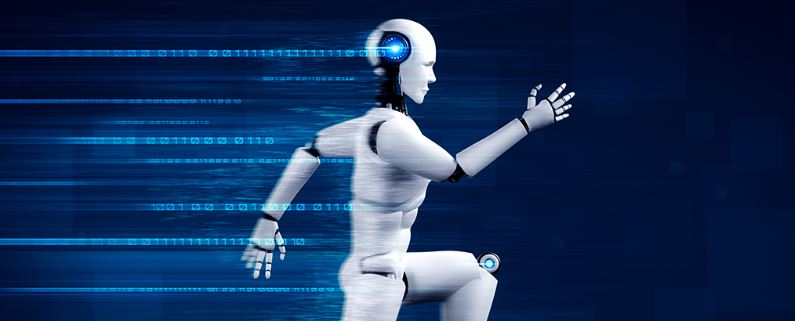
We've made some significant steps forward in robotics and AI in recent years, but haven't yet built robots that can outpace the best that nature has to offer – and new research explores the key reasons why.
By reviewing and referring to more than a hundred previous studies, and pitting robots against animals in categories like power, frame, actuation, sensing, and control, the conclusion was quite a surprising one.
It's not that our most advanced robots are far behind in any one particular category. The problem is that we haven't yet figured out how to combine all these different elements together.
"At the system level, robots are not as good," says mechanical engineer Kaushik Jayaram from the University of Colorado Boulder.
"We run into inherent design trade-offs. If we try to optimize for one thing, like forward speed, we might lose out on something else, like turning ability."
As an example, Jayaram points to a cockroach-inspired robot he helped develop in 2020. It's speedy moving forwards and backwards, but struggles when it's time to change direction or move over a surface that isn't flat.
These trade-offs can also combine into a benefit, when two processes interact in unexpected ways that help the system. Though this type of interaction is more likely to appear in more complex systems, but they're hard (if not impossible) to predict.
The researchers also point out that even the smallest insects beat most robots at sensing the world around them and adapting their actions to it; a flexibility and agility that's crucial if you want to move in a way that's both speedy and safe.
Then there's power. While motors and batteries can beat tissue and muscle in certain metrics, in animals power is fully integrated with sensory information in the same cellular subunits.
"Animals are, in some sense, the embodiment of this ultimate design principle – a system that functions really well together," says Jayaram. "Nature is a really useful teacher."
One of the driving motivations behind the new research is that it'll inspire engineers to create robots that are more flexible and nimble, and better able to adapt their way of moving depending on the scenario.
The suggestion from the research team is that we might focus on trying to get better at building 'functional subunits' where different elements are combined just as they are in animals cells – elements like power, sensing, and movement.
This tactic would provide more opportunity to explore negative tradeoffs and potential emergent properties. Until we achieve a better understanding of these factors, cheetahs and cockroaches will still have the edge.
"As an engineer, it is kind of upsetting," says Jayaram. "Over 200 years of intense engineering, we've been able to send spacecraft to the moon and Mars and so much more."
"But it's confounding that we do not yet have robots that are significantly better than biological systems at locomotion in natural environments."
Reality Of Islam |
|

Keeping sil
Two experim
Changing a
Plants are
 9:3:43
2018-11-05
9:3:43
2018-11-05
10 benefits of Marriage in Islam
7:5:22
2019-04-08
benefits of reciting surat yunus, hud &
9:45:7
2018-12-24
advantages & disadvantages of divorce
11:35:12
2018-06-10
6:0:51
2018-10-16
6:28:21
2022-12-20
8:30:23
2022-03-03
10:55:53
2022-06-13
a hero waters thirsty wild animals
9:4:9
2022-01-06
1:34:8
2022-02-01
7:59:14
2018-06-21
5:57:34
2023-03-18
5:41:46
2023-03-18
| LATEST |
 HOME
HOME