الوضع الليلي


 11:2:25
 2024-01-20
 1586
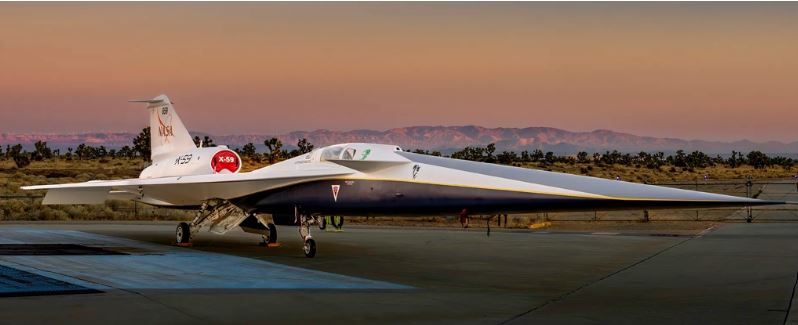
The term space plane conjures up all sorts of images and NASA with their new X-59, (even the name sounds mysterious) they have definitely not disappointed.
Their new quiet supersonic aircraft has been designed to minimize the sonic boom it creates when it crosses the speed of sound. It will fly at 1.4 times the speed of sound and is set for its maiden flight later this year.
The plane is the result of a joint project between NASA and Lockheed Martin and it has a simple yet ambitious aim. The dream is to revolutionize air travel by producing a new generation of commercial jets that can travel faster than the speed of sound.
It's important to note that these will be the next generation of supersonic aircraft because Tupolev TU-144 (maiden flight 31 Dec 1968) and Concorde (maiden flight 2 March 1969) were the first.
Supersonic flight is the ability to fly at speeds in excess of the speed of sound. The value for the speed of sound varies based on air density, but at sea level it is 1,224 km/hour. Fly slower than this and the flight is subsonic, fly faster and it goes supersonic. Aircraft that break the sound barrier produce the famous sonic boom but this does not occur at the moment an object crosses the sound barrier.
The sonic boom, which is the effect of compressed shock waves, is a continuous sound that occurs all the time the aircraft travels faster than sound. To observers on the ground, you only experience the boom when the pressure waves pass over you. The sound can be quite distressing so the X-59 hopes to address the disturbance that it causes.
The design of the X-59 looks like it is straight out of a science fiction movie. It is 30 meters long and 9 meters wide. It has a thin, tapered nose which takes up about a third of the overall length and it is hoped it will significantly break up the shockwaves that create the sonic boom.
Because of the design and the long nose, the pilot sits about half-way along, making it difficult to get a suitable forward view out of a window. To address this, high resolution cameras feed a signal to 4K monitors in the cockpit as part of the eXternal Vision System.
Concorde was decommissioned in 2003 having flown for 27 years. Since then, we have been limited to subsonic flights and ocean crossing lasting many hours. In comparison, Concorde could complete a trans-Atlantic crossing from JFK to Heathrow in a little under three hours while today's jets takes more like seven hours.
If the test flights of X-59 later this year are a success then maybe we can all look forward to faster travel times around the globe in years to come.
Reality Of Islam |
|

Keeping sil

Two experim
Changing a

Plants are
 9:3:43
2018-11-05
10 benefits of Marriage in Islam
7:5:22
2019-04-08
benefits of reciting surat yunus, hud &
9:45:7
2018-12-24
advantages & disadvantages of divorce
11:35:12
2018-06-10
6:0:51
2018-10-16
8:4:21
2022-01-08
12:47:1
2022-12-20
10:47:11
2022-11-22
7:59:14
2018-06-21
2:33:4
2023-02-15
7:34:7
2023-02-28
8:19:41
2018-06-21
5:41:46
2023-03-18
| LATEST |
 HOME