الوضع الليلي


 8:7:12
  2019-10-17
  1717
1717
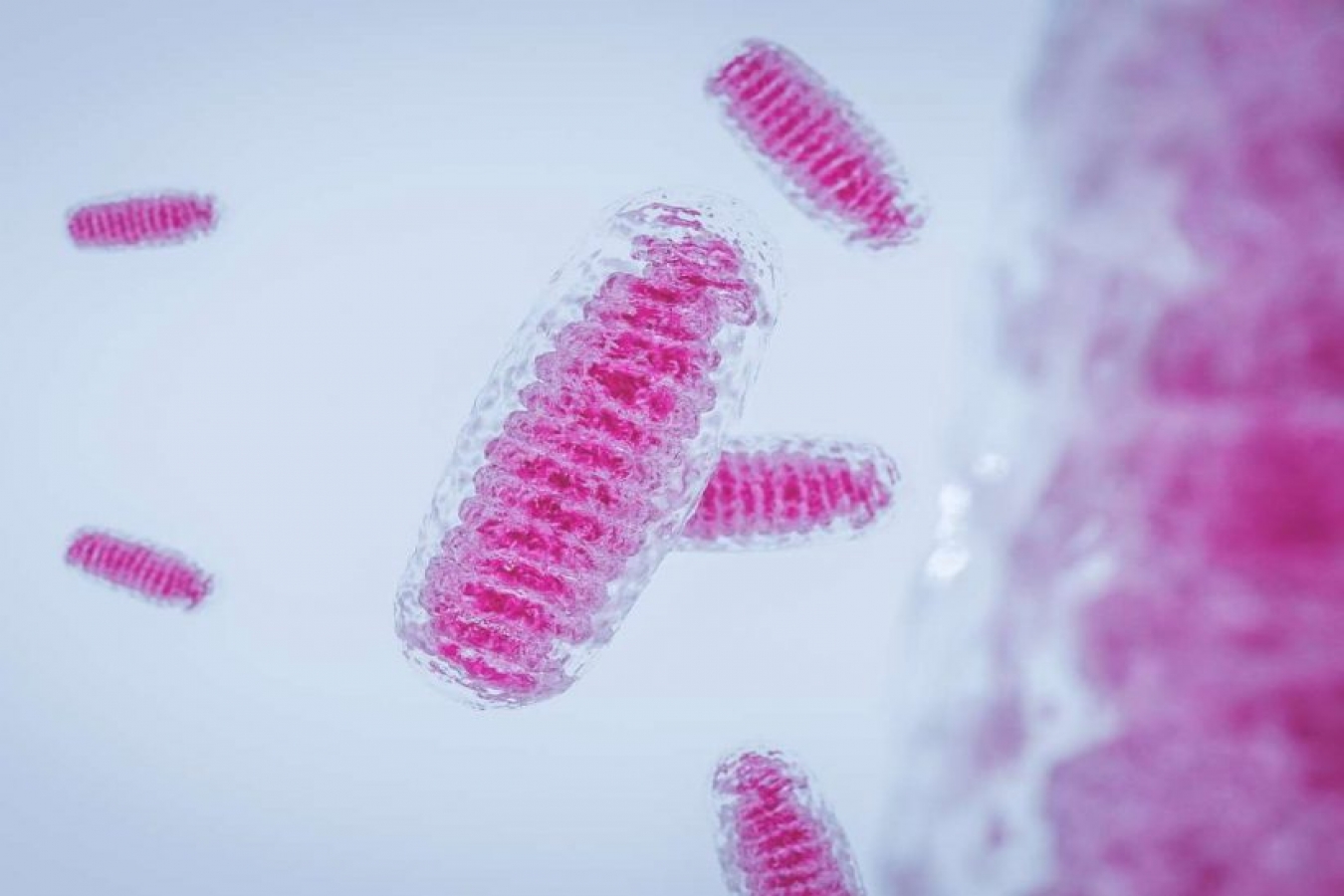
New research reveals that mitochondria, the tiny powerhouses that live inside cells and give them energy, work more like a Tesla battery pack than the kind of battery that you put in a flashlight.
Apart from red blood cells, all cells in the human body contain one or more mitochondria, and some contain thousands. These internal cell structures, or organelles, use oxygen to make chemical units of energy for the cell.
Mitochondria are unusual in that they have two membranes: a smooth one on the outside and a wrinkled, folded one on the inside.
Scientists call the folds of a mitochondrion's internal membrane cristae. Until recently, they believed that the purpose of the folding was to increase the surface area for producing energy.
However, the authors of a recent EMBO Journal study paper dispel this idea.
Instead, they propose that the cristae are more like independent batteries working together in an array, similar to the Tesla battery packs that power electric cars.
An array of autonomous batteries
The researchers came to this conclusion after visualizing energy production inside mitochondria with the help of high resolution microscopy.
"What the images told us was that each of these cristae is electrically independent, functioning as an autonomous battery," says senior study author Dr. Orian S. Shirihai, a professor of medicine in endocrinology and pharmacology at the David Geffen School of Medicine at the University of California, Los Angeles.
"One crista," he adds, "can get damaged and stop functioning while the others maintain their membrane potential."
For a long time, scientists believed that each mitochondrion comprised a single bioenergetic unit. The authors refer to typical previous experiments, the results of which led investigators to conclude that "the entire organelle functions as one electrochemical unit."
Indeed, what Dr. Shirihai could see with traditional microscopy appeared to confirm this. Observing cells functioning well with a few very long mitochondria did not suggest the idea of lots of small batteries.
"Nobody had looked at this before because we were so locked into this way of thinking; the assumption was that one mitochondrion meant one battery," he explains.
Unprecedented high resolution imaging
However, conversations with engineers who design electric vehicles made Dr. Shirihai aware of the advantages of arrays of lots of small batteries instead of one big one.
"[I]f something happens to one [battery] cell," he notes, "the system can keep working, and multiple small batteries can provide a very high current when you need it."
Depending on the model, Tesla electric vehicles can have up to 7,000 small battery cells. These take the form of a grid that allows the vehicle to charge quickly and cool efficiently. Such an arrangement also delivers a lot of power for acceleration.
To take a closer look inside mitochondria, the team "developed a novel approach for imaging the [inner mitochondrial membrane] at high spatiotemporal resolution in living cells." Scientists had never before seen such a high resolution.
With the newly optimized high resolution microscopy, the team could visualize voltage distribution and energy production inside the mitochondria.
Protein clusters act like electrical insulators
The researchers saw how protein clusters between the cristae acted as electrical insulators. They already knew that without the protein clusters, mitochondria break down more easily. In fact, the team also saw how mitochondria lacking the protein clusters behaved more like one big battery cell.
The authors suggest that these study findings increase the understanding of not only how mitochondria work but also how the organelles contribute to disease, aging, and even medical complications.
Experts have linked a number of medical complications — such as ischemia‐reperfusion injury — to the severe disruption of cristae in mitochondria.
Dr. Shirihai muses: "The battery experts I had originally talked to were very excited to hear that they were right."
Scientists believe that mitochondria evolved from an ancient collaboration that came about when cells with nuclei engulfed oxygen-dependent simple cells that lacked a nucleus. In return for protection, the internalized cell, or organelle, provides its host with energy.
"It turns out that mitochondria and Teslas, with their many small batteries, are a case of convergent evolution." Dr. Orian S. Shirihai
Reality Of Islam |
|
MIT enginee
Scientists
Researchers
 9:3:43
2018-11-05
9:3:43
2018-11-05
10 benefits of Marriage in Islam
7:5:22
2019-04-08
benefits of reciting surat yunus, hud &
9:45:7
2018-12-24
advantages & disadvantages of divorce
11:35:12
2018-06-10
6:0:51
2018-10-16
8:25:12
2022-03-09
1:16:44
2018-05-14
2:2:13
2022-10-08
11:34:48
2022-06-29
9:30:2
2021-11-12
3:42:22
2021-12-24
2:11:12
2022-10-15
5:41:46
2023-03-18
| LATEST |
 HOME
HOME