الوضع الليلي


 5:53:31
 2019-09-01
 1575
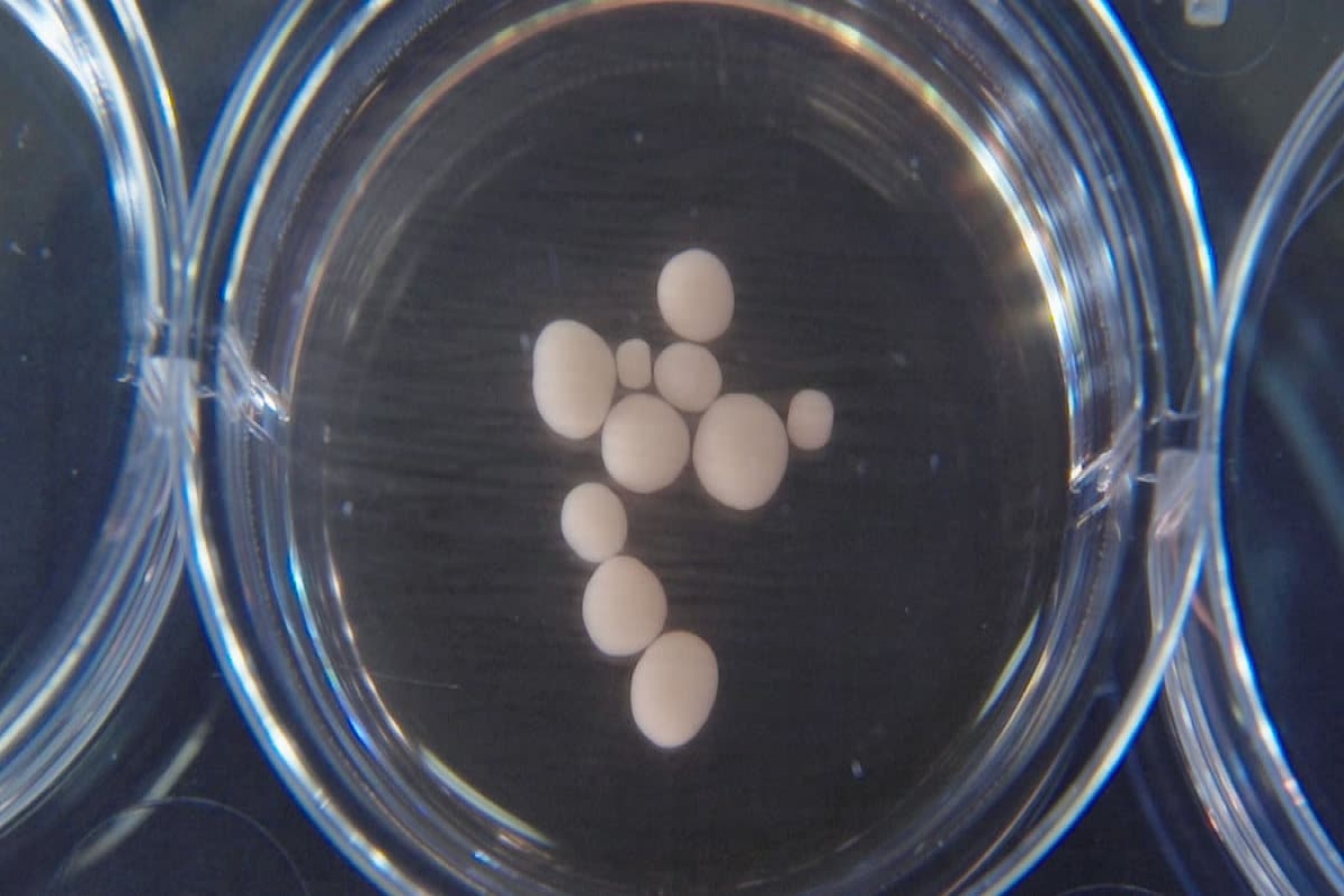
Scientists have picked up electrical activity in pea-sized, lab-grown brains for the first time, paving the way to model neurological conditions and answer fundamental questions on how our grey matter develops. It's not clear whether the mini-brains are conscious -- the team behind the breakthrough suspect they're not but can't say for sure -- opening up a new ethical dimension to this area of research moving forward.
So-called "brain organoids" derived from adult stem cells have been around for a decade or so but have never previously developed functional neural networks.
"If you had asked me five years ago would you think that a brain organoid would ever have a sophisticated network able to generate a brain oscillation, I would say no," Alysson Muotri, a biologist at the University of California San Diego, told AFP.
A paper published by Muotri and colleagues in the journal Cell Press on Thursday said that part of the breakthrough was the result of a better procedure to grow stem cells, including optimizing the culture medium formula.
The other part was initially surprising, but also intuitive when the researchers thought about it: simply allowing the neurons adequate time to develop, just as unborn babies' brains develop in the womb.
The team began to detect bursts of brain waves from organoids from about two months.
The signals were sparse and had the same frequency, a pattern seen in very immature human brains. But as they continued to grow, they produced brain waves at different frequencies, and the signals appeared more regularly, suggesting further development of their neural networks.
Early organoids were used to model what happens when the brain is exposed to diseases like the Zika virus which causes physical malformations.
But there are also a host of neurological conditions such as autism, epilepsy, and even psychiatric conditions where problems arise from how the brain network is wired, not from malformations.
By creating brain organoids from the stem cells of individuals with these conditions, scientists could better model them and perhaps one day find cures.
They also hope to answer more fundamental questions. Muotri said the organoids development plateaued around nine to 10 months.
"I'm curious about that. I wonder if it's because we don't have a vascularization system to allow the nutrients to get inside, or it could be that we are just lacking stimulation" in the form of sensory input.
He hopes to test both hypotheses.
About whether the brain organoids are conscious, Muotri said he suspects not because of its early stage of development.
"But if you ask me, 'How do you know?' I would say I have no evidence either way, because we don't even know how to detect consciousness in other systems," he said.
"As we get closer to the human brain, all of these ethical questions will appear," he admitted, proposing the field be subject to regulation in the same way animal testing is.
Reality Of Islam |
|
Keeping sil
Two experim
Changing a

Plants are
 9:3:43
2018-11-05
10 benefits of Marriage in Islam
7:5:22
2019-04-08
benefits of reciting surat yunus, hud &
9:45:7
2018-12-24
advantages & disadvantages of divorce
11:35:12
2018-06-10
6:0:51
2018-10-16
10:47:11
2022-11-22
3:18:29
2022-12-24
6:0:8
2023-03-19
10:55:53
2022-06-13
1:38:41
2021-12-08
7:26:19
2022-04-08
3:42:22
2021-12-24
5:41:46
2023-03-18
| LATEST |
 HOME