الوضع الليلي


 6:38:47
 2019-07-28
 1765
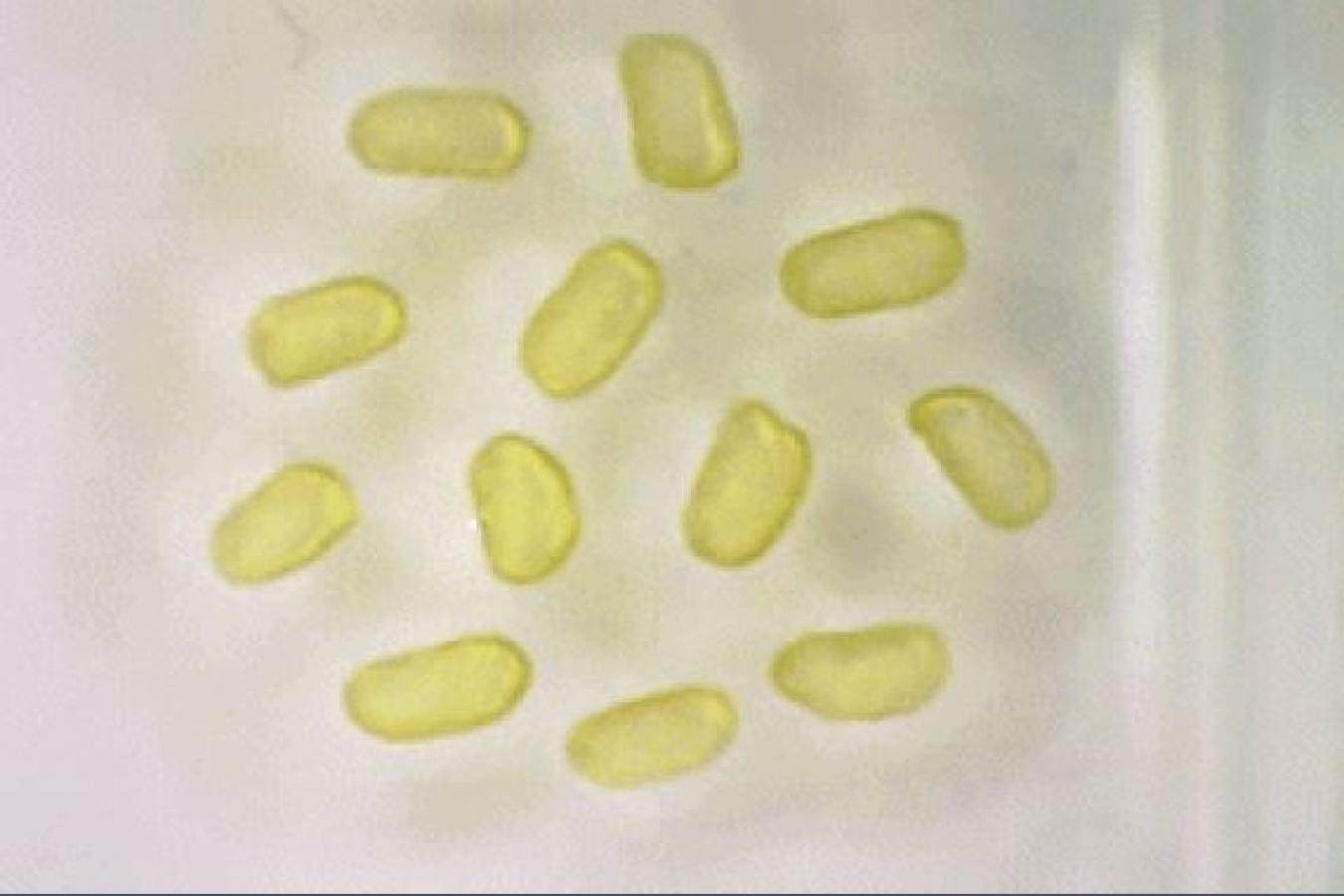
For the first time, scientists have created a permanently magnetic liquid. These liquid droplets can morph into various shapes and be externally manipulated to move around, according to a new study.
We typically imagine magnets as being solid, said senior author Thomas Russell, a distinguished professor of polymer science and engineering at the University of Massachusetts Amherst. But now we know that "we can make magnets that are liquid and they could conform to different shapes — and the shapes are really up to you."
The liquid droplets can change shape from a sphere to a cylinder to a pancake, he told Live Science. "We can [even] make it look like a sea urchin if we wanted."
Russell and his team created these liquid magnets by accident while experimenting with 3D printing liquids at the Lawrence Berkeley National Laboratory (where Russell is also a visiting faculty scientist). The goal was to create materials that are solid but have characteristics of liquids for various energy applications.
One day, postdoctoral student and lead author Xubo Liu noticed 3D-printed material, made from magnetized particles called iron-oxides, spinning around in unison on a magnetic stir plate. So when the team realized the entire construct, not just the particles, had become magnetic, they decided to investigate further.
Using a technique to 3D-print liquids, the scientists created millimeter-size droplets from water, oil and iron-oxides. The liquid droplets keep their shape because some of the iron-oxide particles bind with surfactants — substances that reduce the surface tension of a liquid. The surfactants create a film around the liquid water, with some iron-oxide particles creating part of the filmy barrier, and the rest of the particles enclosed inside, Russell said.
The team then placed the millimeter-size droplets near a magnetic coil to magnetize them. But when they took the magnetic coil away, the droplets demonstrated an unseen behavior in liquids — they remained magnetized. (Magnetic liquids called ferrofluids do exist, but these liquids are only magnetized when in the presence of a magnetic field.)
When those droplets approached a magnetic field, the tiny iron-oxide particles all aligned in the same direction. And once they removed the magnetic field, the iron-oxide particles bound to the surfactant in the film were so jam-packed that they couldn't move and so remained aligned. But those free-floating inside the droplet also remained aligned.
The scientists don't fully understand how these particles hold onto the field, Russell said. Once they figure that out, there are many potential applications. For example, Russell imagines printing a cylinder with a non-magnetic middle and two magnetic caps. "The two ends would come together like a horseshoe magnet," and be used as a mini "grabber," he said.
In an even more bizarre application, imagine a mini liquid person — a smaller-scale version of the liquid T-1000 from the second "Terminator" movie — Russell said. Now imagine that parts of this mini liquid man are magnetized and parts aren't. An external magnetic field could then force the little person to move its limbs like a marionette.
"For me, it sort of represents a sort of new state of magnetic materials," Russell said. The findings were published on July 19 in the journal Science.
Reality Of Islam |
|

Keeping sil
Two experim
Changing a

Plants are
 9:3:43
2018-11-05
10 benefits of Marriage in Islam
7:5:22
2019-04-08
benefits of reciting surat yunus, hud &
9:45:7
2018-12-24
advantages & disadvantages of divorce
11:35:12
2018-06-10
6:0:51
2018-10-16
5:57:34
2023-03-18
8:39:51
2022-09-23
7:32:24
2022-02-14
bahlool & the throne of haroun rashid
8:20:35
2018-06-21
9:42:16
2022-10-19
7:26:19
2022-04-08
3:43:50
2022-11-05
5:41:46
2023-03-18
| LATEST |
 HOME