الوضع الليلي


 10:5:34
  2026-03-23
  1177
1177
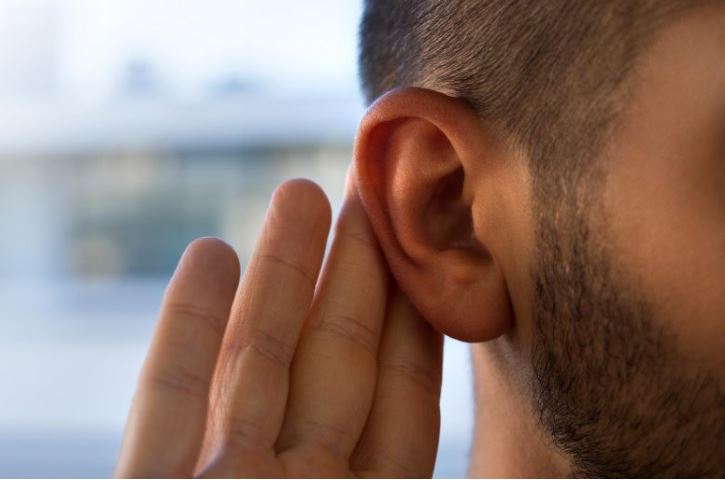
Scientists have uncovered an unexpected second role for proteins that are critical for hearing. In addition to enabling the ear to detect sound, these proteins also help control how fatty molecules move within the membranes of cells. When this newly identified function is disrupted due to genetic mutations, damage from loud noise, or certain medications, it may set off a chain reaction that kills the inner ear’s fragile sensory cells and leads to permanent hearing loss.
The findings were recently presented at the 70th Biophysical Society Annual Meeting in San Francisco.
Inside the inner ear, specialized sensory cells known as hair cells translate sound waves into electrical signals that the brain can interpret. Hair cells are named for the tiny projections on their surface, called stereocilia, which are arranged in bundles that resemble a mohawk. When sound causes these structures to bend, ion channels open and allow charged particles to enter the cell, initiating the electrical signal that carries auditory information to the brain.
“When sound vibrations bend these hair-like structures, it opens channels that let ions flow into the cell, triggering a signal that carry sound to the brain,” explained Hubert Lee, a postdoctoral fellow in the lab of Angela Ballesteros at the National Institute on Deafness and Other Communication Disorders (NIDCD) at the National Institutes of Health. “But when there’s a problem with these channel proteins, the hair cells die. And these cells don’t regenerate—so the hearing loss is permanent.”
Beyond Sound Conversion: A Second Function
For years, researchers have focused on two proteins, TMC1 and TMC2, as central components of the machinery that converts mechanical sound vibrations into electrical signals. Mutations in TMC1 are one of the most common causes of inherited deafness. Now, the NIDCD team has shown that these same proteins perform another, very different task.
“We found that TMC1 and TMC2 are not only ion channels important for hearing—they also regulate the cell membrane,” said Ballesteros. “And we think this membrane regulatory function, not the channel function, is what leads to hair cell death when things go wrong.”
Beyond acting as ion channels, TMC1 and TMC2 also function as “lipid scramblases,” proteins that redistribute phospholipids between the inner and outer layers of the cell membrane. Under healthy conditions, specific phospholipids remain on designated sides of the membrane, maintaining an important asymmetry. When a phospholipid called phosphatidylserine appears on the outer surface, it typically signals that a cell is undergoing programmed cell death.
“Hair cells from mouse models carrying mutations in TMC1 that cause hearing loss exhibit this membrane dysregulation—phosphatidylserine gets externalized, and the membrane starts blebbing and falling apart,” Ballesteros said. “This is an apoptotic hallmark. It’s what’s killing the hair cells.”
Explaining Drug-Induced Hearing Loss
The discovery may also help explain why some medications harm hearing. Aminoglycosides, a widely used class of antibiotics, are known to be toxic to the inner ear. The researchers found that these drugs trigger the same membrane-disrupting scramblase activity in vivo.
“Scientists initially thought these drugs caused hearing loss by blocking the channel function of TMCs in vivo,” Lee said. “But what we’re seeing now is that in the chaotic environment of the living hair cell, these drugs act as potent disruptors, triggering a collapse of membrane asymmetry. Yet, in the serene isolation of our reconstituted system, the protein remains indifferent to them, suggesting that other factors, such as lipid specificity or missing protein partners, are at play.”
The team also discovered that the scramblase activity depends on cholesterol levels in the cell membrane—a finding that could point toward future treatments based on diet or cholesterol management that could someday help protect our ears from ototoxic medications or genetic hearing loss.
“If we understand the mechanism by which these drugs activate the scramblase, we might be able to design new drugs that lack this effect,” said Yein Christina Park, graduate student at the NIH-JHU program and co-first author of this work. “We could potentially have antibiotics that don’t cause permanent hearing loss.”
Reality Of Islam |
|
MIT enginee
Scientists

Researchers
 9:3:43
2018-11-05
9:3:43
2018-11-05
10 benefits of Marriage in Islam
7:5:22
2019-04-08
benefits of reciting surat yunus, hud &
9:45:7
2018-12-24
advantages & disadvantages of divorce
11:35:12
2018-06-10
6:0:51
2018-10-16
2:34:48
2022-01-18
7:59:14
2018-06-21
4:25:57
2023-02-11
2:33:4
2023-02-15
8:21:9
2018-06-21
2:11:12
2022-10-15
3:42:22
2021-12-24
5:41:46
2023-03-18
| LATEST |
 HOME
HOME