الوضع الليلي


 10:47:30
  2025-11-27
  1624
1624
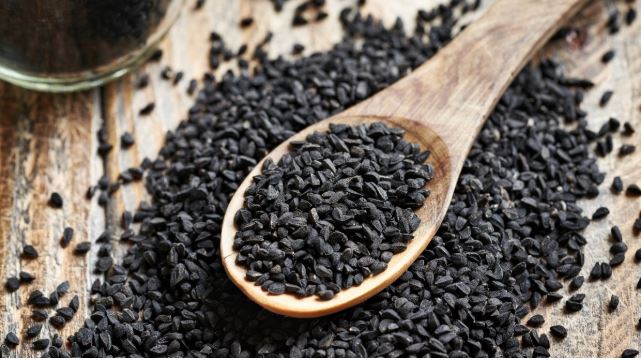
A black seed, long used in cooking and traditional medicine, has shown promise in lowering cholesterol levels in a new clinical trial.
Researchers think it might even inhibit the formation of mature fat cells, based on lab-grown cell experiments.
Black cumin (Nigella staiva) is a flowering plant native to western Asia and eastern Europe, whose seeds are commonly used as a spice in curries and on vegetables.
Humans have cultivated cumin for thousands of years, according to archaeological evidence, and it is often used in folk medicine as an oil, paste, powder, or extract.
Western science has only recently taken notice of cumin and put it to the test. While evidence is sparse, initial results mostly from cell and animal studies suggest there may be overlooked health benefits to this common spice, with possible antioxidant and anti-inflammatory perks.
In a recent clinical trial led by scientists at Osaka Metropolitan University in Japan, 22 participants who consumed 5 grams of black cumin seed powder each day showed a decrease in bad cholesterol and an increase in good cholesterol after just eight weeks. The 20 people in the control group showed no such changes.
These improvements from roughly a spoonful of cumin powder a day could ultimately boost cardiovascular health, lowering the risk of future heart problems, the authors suggest.
"This study strongly suggests that black cumin seeds are useful as a functional food for preventing obesity and lifestyle-related diseases," says food scientist Akiko Kojima-Yuasa.
"It was so gratifying to see black cumin comprehensively demonstrate actual, demonstrable blood lipid-lowering effects in a human trial."
The findings join several other small, preliminary trials on cumin, which suggest it may help with weight loss and cholesterol levels.
But not all the results agree, and some of the evidence is controversial.
In 2015, for instance, one notable trial found that taking cumin capsules daily can have the same outcomes as cholesterol-lowering medication, like orlistat. The scientific journal, however, later flagged these results with an ‘expression of concern', which is often issued when misconduct or unreliable findings are suspected. It's not clear which is the case in this particular scenario.
In the years since, several other clinical trials have found cholesterol-lowering benefits to cumin, albeit to a lesser extent.
The newest study from Kojima-Yuasa and colleagues suggests that black cumin may inhibit fat formation by impacting key genetic regulators of the metabolic process. But more research is needed.
"We hope to perform longer-term and larger-scale clinical trials to investigate the effects of black cumin on metabolism," says Kojima-Yuasa.
"We are particularly interested in investigating its effects on insulin resistance in diabetes and inflammatory markers."
Reality Of Islam |
|

MIT enginee

Scientists

Researchers
 9:3:43
2018-11-05
9:3:43
2018-11-05
10 benefits of Marriage in Islam
7:5:22
2019-04-08
benefits of reciting surat yunus, hud &
9:45:7
2018-12-24
advantages & disadvantages of divorce
11:35:12
2018-06-10
6:0:51
2018-10-16
4:25:57
2023-02-11
11:11:59
2023-02-01
7:59:14
2018-06-21
2:2:13
2022-10-08
9:30:2
2021-11-12
11:34:48
2022-06-29
5:58:12
2021-12-18
5:41:46
2023-03-18
| LATEST |
 HOME
HOME