الوضع الليلي


 6:47:21
  2025-03-06
  1800
1800
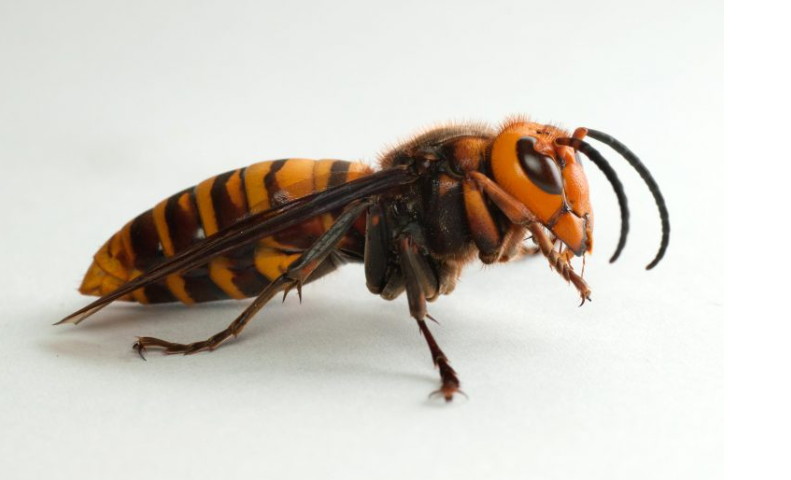
Asian hornets are far more dangerous to ecosystems than previously thought, consuming over 1,400 insect species — including crucial pollinators.
A study using deep sequencing revealed that while honey bees are frequently targeted, these invasive predators have a diverse and adaptable diet. Their rapid expansion across Europe poses a serious threat to already declining insect populations, intensifying concerns about biodiversity and agriculture.
Asian Hornets’ Diet Holds Surprising Diversity
Researchers from the University of Exeter have discovered that Asian hornets consume an astonishing variety of prey, with around 1,400 different species found in their guts.
The team analyzed hornet samples collected from France, Spain, Jersey, and the UK throughout their active season. Their findings show that while Asian hornets are notorious for hunting honey bees, their diet is far more diverse. They prey on a wide range of insects, including wasps, flies, beetles, butterflies, moths, and even spiders.
Among the species identified, the European honey bee was the most common, appearing in every sampled nest and in nearly all larvae within those nests. However, the study confirms that Asian hornets do not rely solely on honey bees, making them a broad and adaptable predator.
An Invasive Predator Expands Its Territory
As an invasive species, Asian hornets have spread across much of western Europe. In the UK mainland, authorities destroy nests each year in an effort to prevent their establishment.
“Asian hornets are known to prey on honey bees, but until now the full range of their diet hasn’t been tested,” said lead author Siffreya Pedersen.
“The diet varied strongly over the seasons and between regions, showing that they are highly flexible predators.
“Most insect populations are in decline due to factors such as habitat destruction and chemical pollution. The expanding area inhabited by Asian hornets poses an extra threat.”
The study used a method called deep sequencing to identify prey species in the guts of more than 1,500 Asian hornet larvae, which eat food provided by adult hornets.
Pollinators and Ecosystems Under Pressure
Of the top 50 invertebrate prey species identified, 43 are known to visit flowers – and among these were Europe’s three main crop pollinators: the European honey bee, the buff-tailed bumblebee and the red-tailed bumblebee.
“Insects play vital roles in enabling ecosystems to function – including pollination, decomposition and pest control,” Pedersen said.
“Our study provides important additional evidence of the threat posed by Asian hornets as they spread across Europe,” said Dr. Peter Kennedy, from Exeter’s Environment and Sustainability Institute.
The Genetic Breakdown of Their Prey
The researchers identified 1,449 “operational taxonomic units” in the guts of hornet larvae. More than half could be identified as specific species, but the rest could not – so the exact number of species found in the samples is not certain.
Reality Of Islam |
|

Keeping sil

Two experim

Changing a
Plants are
 9:3:43
2018-11-05
9:3:43
2018-11-05
10 benefits of Marriage in Islam
7:5:22
2019-04-08
benefits of reciting surat yunus, hud &
9:45:7
2018-12-24
advantages & disadvantages of divorce
11:35:12
2018-06-10
6:0:51
2018-10-16
9:42:16
2022-10-19
8:4:21
2022-01-08
11:34:48
2022-06-29
6:28:21
2022-12-20
11:2:27
2022-10-06
7:59:14
2018-06-21
3:43:50
2022-11-05
5:41:46
2023-03-18
| LATEST |
 HOME
HOME