الوضع الليلي


 1:45:29
  2024-11-16
  1896
1896
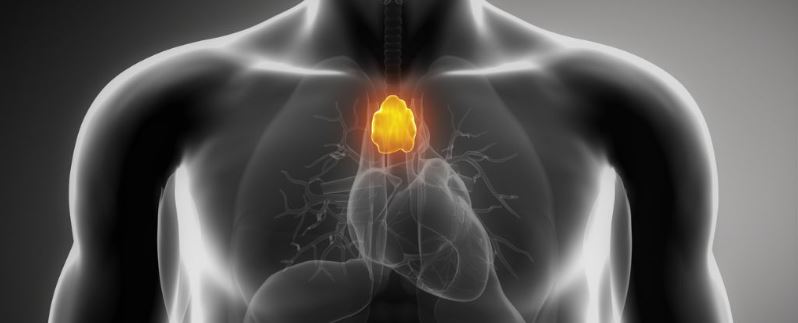
There's a small fatty gland that sits behind your sternum and is often said to be 'useless' in adulthood.
A retrospective study, however, suggests the thymus gland is not nearly as expendable as experts once thought.
US researchers found that those who get their thymus removed face an increased risk of death from any cause in the five years following the surgery.
They also face an increased risk of developing cancer during that time.
"We discovered that the thymus is absolutely required for health. If it isn't there, people's risk of dying and risk of cancer is at least double," Harvard University oncologist David Scadden said when the research was published last year.
The study is purely observational, which means it cannot show that removing the thymus directly causes cancer or other fatal illnesses.
But researchers are concerned by their findings. Until we know more, they argue that preserving the thymus "should be a clinical priority" where possible.
In childhood, the thymus is known to play a critical role in developing the immune system. When the gland is removed at a young age, patients show long-term reductions in T cells, which are a type of white blood cell that combats germs and disease.
Kids without a thymus also tend to have an impaired immune response to vaccines.
By the time a person hits puberty, however, the thymus shrivels up and produces far fewer T cells for the body. It can seemingly be removed without immediate harm, and because it sits in front of the heart, it is often taken out during cardiothoracic surgery.
But while some patients with thymus cancer or chronic autoimmune disease, like myasthenia gravis, require a thymectomy, in which the thymus is surgically removed, the gland isn't always a hindrance.
It could even be a big help.
Using patient data from a state healthcare system, researchers in Boston compared the outcomes of patients who had undergone cardiothoracic surgery: more than 6,000 people (controls) who did not have their thymus removed and 1,146 people who did have their thymus removed.
Those who underwent a thymectomy were almost twice as likely as controls to die within 5 years, even after accounting for sex, age, race, and those with cancer of the thymus, myasthenia gravis, or postoperative infections.
Patients who had their thymus removed were also twice as likely to develop cancer within 5 years of surgery.
What's more, this cancer was generally more aggressive and often recurred after treatment compared to the control group.
"This indicates that the consequences of thymus removal should be carefully considered when contemplating thymectomy," said Scadden.
Why these associations exist is unknown, but researchers suspect a lack of thymus is somehow messing with the healthy function of the adult immune system.
A subset of patients in the study who had undergone a thymectomy showed fewer diverse T-cell receptors in their bloodwork, which could possibly contribute to the development of cancer or autoimmune diseases after surgery.
"Together, these findings support a role for the thymus contributing to new T-cell production in adulthood and to the maintenance of adult human health," the authors of the study conclude.
Their results, they say, strongly suggest that the thymus plays a functionally important role in our continued health, right up to the bitter end.
Reality Of Islam |
|

MIT enginee

Scientists

Researchers
 9:3:43
2018-11-05
9:3:43
2018-11-05
10 benefits of Marriage in Islam
7:5:22
2019-04-08
benefits of reciting surat yunus, hud &
9:45:7
2018-12-24
advantages & disadvantages of divorce
11:35:12
2018-06-10
6:0:51
2018-10-16
the happy life of mankind requirement
6:36:36
2022-01-25
7:45:39
2018-06-21
9:50:37
2023-02-28
8:3:0
2018-06-21
10:35:40
2022-05-26
7:34:7
2023-02-28
9:30:2
2021-11-12
5:41:46
2023-03-18
| LATEST |
 HOME
HOME