الوضع الليلي


 5:49:55
  2024-04-14
  1854
1854

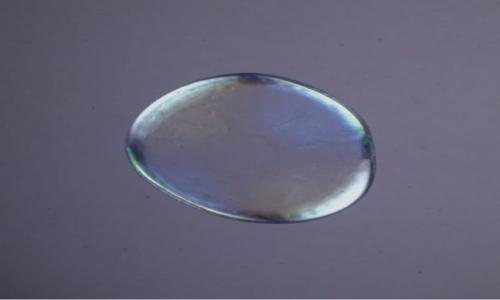
Blinking: it happens every few seconds without you even thinking – unless of course, you're engaging in a staring competition of eye-watering proportions.
Tears well up as you resist the urge to blink, and when you finally do… Oh, sweet relief. Your eyeballs are bathed in fluid as your lids momentarily close.
But blinking does more than wet the eye. Strangely, it also helps with vision, a new study shows. It's the latest effort in a string of research studies attempting to pinpoint what blinking is useful for, as we do it more often than necessary to lubricate the eye.
"We show that blinking increases the power of retinal stimulation and that this effect significantly enhances visibility despite the time lost in exposure to the external scene," University of Rochester neuroscientist Bin Yang and colleagues write in their published paper.
Past research has suggested that blinking refreshing our attention, helps with object recognition, and chops an otherwise endless stream of visual and auditory information into chunks for processing.
However, we also lose our vision in short 300-millisecond blackouts each time we blink, even if we don't notice it happening. You might expect such an interruption to cut through the activity of neurons responsive to visual inputs – but perhaps not in a positive way.
Surprisingly, a 2016 study showed that although neural activity decreases as eyelids close, it rebounds to a higher level immediately following a blink, which is thought to enhance vision.
Following on from those findings, Yang and colleagues used high-resolution eye-tracking in this new study to investigate how blinking affects vision in 12 people who viewed images of varying contrast on a screen.
Since both eyes blink together, only one eye was tracked in each person, and the intensity of light, or luminance, of the participants' visual inputs was also recorded.
Relative to periods where participants fixated on the screen, the researchers found blinks increased the strength of visual input signals by modulating the intensity of light falling on the retina.
This visual boost was seen when participants were instructed to blink and when they did so reflexively. Unlike previous research that found only real blinks improved attention, not simulated ones, changes in luminosity imitating a blink also momentarily boosted vision.
"Rather than impairing visual processing as commonly assumed, blinks enhances sensitivity," Yang and colleagues report.
What's more, the researchers found blinks help reformat visual information, similar to how other eye movements we're oblivious to (super-fast saccades and ocular drifts) shape vision by adding spatial markers and 'timestamps' to the video that is our vision.
Considering we spend an estimated 10 percent of our waking hours with our eyes closed because of blinking, it's comforting to know that at least it's for a good reason.
Reality Of Islam |
|
MIT enginee
Scientists

Researchers
 9:3:43
2018-11-05
9:3:43
2018-11-05
10 benefits of Marriage in Islam
7:5:22
2019-04-08
benefits of reciting surat yunus, hud &
9:45:7
2018-12-24
advantages & disadvantages of divorce
11:35:12
2018-06-10
6:0:51
2018-10-16
7:32:24
2022-02-14
11:34:48
2022-06-29
5:58:12
2021-12-18
4:2:19
2022-10-10
bahlool & the throne of haroun rashid
8:20:35
2018-06-21
1:38:41
2021-12-08
2:11:12
2022-10-15
5:41:46
2023-03-18
| LATEST |
 HOME
HOME