Recent Advances in Techniques
Historically, analysts performing LLE have experienced difficulties such as exposure to large volumes of organic solvents, formation of emulsions, and generation of mountains of dirty, expensive glassware. To address these problems, other sample preparation techniques, such as solid-phase extraction (SPE) and solid-phase microextraction (SPME), have experienced increased development and implementation during the previous two decades.
However, advances in microfluidics amenable to automation are fueling a resurgence of LLE applications while overcoming some of the inherent difficulties associated with them. Fujiwara et al. devised instrumentation for online, continuous ionpair formation and solvent extraction, phase separation, and detection. The procedure was applied to the determination of atropine in synthetic urine, and of atropine and scopolamine in standard pharmaceuticals. Aqueous sample solution was pumped at a flow rate of 5 mL/min. The organic extracting solvent, dichloromethane, was pumped at a flow rate of 2 mL/ min and mixed with the aqueous sample stream to produce an aqueous toorganic volume ratio of 2.5. The mixture was passed through an extraction coil composed of a 3-m PTFE tube [0.5 mm inside diameter (ID)] where associated ion pairs were transferred from the aqueous into the organic phase. The phases were separated using a Teflon membrane. The organic phase transversed the phase-separating membrane and passed onward in the stream to the detector while the aqueous stream was wasted.
Tokeshi et al. performed an ion-pair solvent extraction successfully on a microchannel-fabricated quartz glass chip. An aqueous Fe complex (Fe– 4,7-diphenyl-1,10-phenanthrolinedisulfonic acid) and a chloroform solution of capriquat (tri-n-octylmethylammonium chloride) were introduced separately into a microchannel (250 mm) to form a parallel two-phase laminar flow producing a liquid–liquid aqueous–organic interface (Figure 1.1). The authors noted that in the microchannel, the aqueous–organic interface did not attain the upper–lower arrangement produced by differences in specific gravity normally observed in LLE. In the microchannel environment, surface tension and frictional forces are stronger than specific gravity, resulting in an interface that is side by side and parallel to the sidewalls of the microchannel.

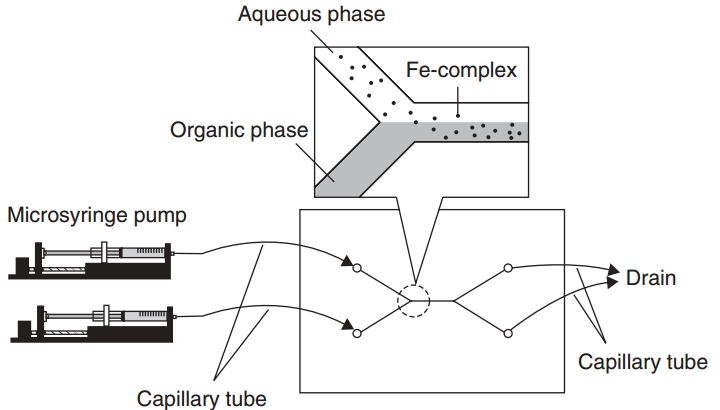
Figure 1.1. Schematic diagram of microextraction system on a glass chip.
The ion-pair product extracted from aqueous solution into chloroform within 45 seconds when the flow was very slow or stopped, corresponding with molecular diffusion time. The extraction system required no mechanical stirring, mixing, or shaking. Solid-supported LLE is a new approach reported by Peng et al.
They exploited the e ciency of 96-channel, programmable, robotic liquidhandling workstation technology to automate methodology for this LLE variation. A LLE plate was prepared by adding inert diatomaceous earth particles to a 96-well plate with hydrophobic GF/C glass fiber bottom filters.
Samples and solvents were added to the plate sequentially. LLE occurred in the interface between the two liquid phases and on the surface of individual particles in each well (Figure 1.1). The organic phase extracts were eluted under gentle vacuum into a 96-well collection plate. The approach was used for initial purification of combinatorial library samples and for quantitative analysis of carboxylic acid–based matrix metalloprotease inhibitor compounds in rat plasma.
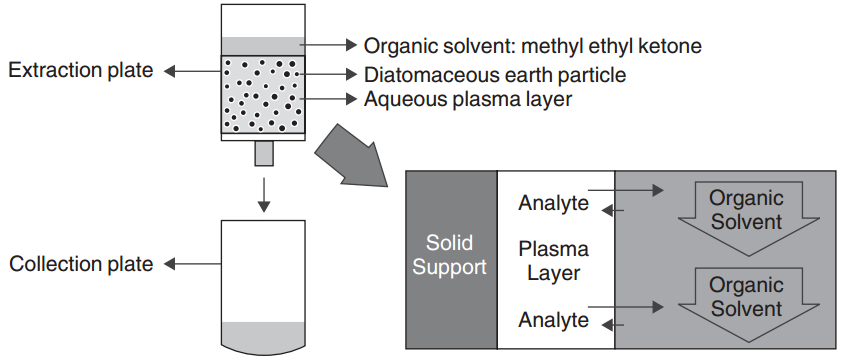
Figure 1.1. Schematic representation of automated liquid–liquid extraction.








