Born: 24 September 1625 in Dordrecht, Netherlands
Died: 20 August 1672 in The Hague, Netherlands
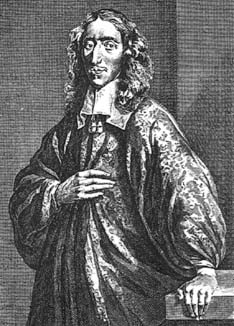
Jan de Witt attended Beeckman's school in Dordrecht, then in 1641 he entered the University of Leiden to study law. At university he showed remarkable talents, especially in mathematics and law. In 1645 Jan and his elder brother Cornelius visited France, Italy, Switzerland and England, then on his return Jan lived at The Hague as an advocate from 1647 to 1650. He had received a doctorate in law from University of Angers in 1645.
De Witt was an associate of van Schooten and lived for a while in his house. His most important work Elementa curvarum linearum (1659-61) was finished in 1649, and was the first systematic development of the analytic geometry of the straight line and conic. It was published by van Schooten as part of his edition of Descartes' Géometrie (1660). We look briefly at the work and the part played by van Schooten in its eventual publication below. At this point we note that the reason for this long delay was that de Witt held high office in Holland during the period following completion of the book and he was too occupied with his political work to do the necessary editing to prepare it for publication.
In 1650 de Witt was appointed Pensionary of Dordrecht, the leader of Dordrecht's deputation in the government of Holland. Three years later he was appointed Grand Pensionary of Holland; this was the office of the Government Attorney (counsel for the defence of the rights of Holland) which effectively combined the offices of Prime Minister and Foriegn Secretary making de Witt the political leader of Holland. As leader of Holland, de Witt applied his mathematical knowledge to the financial and budgetary problems of the republic. He wrote The Worth of Life Annuities Compared to Redemption Bonds which applied probability to questions of state finance. De Witt brought about peace with England in 1654 and after this he was extremely successful in bringing prosperity to Holland. When war broke out again with England in 1665 de Witt was able to bring about a very satisfactory settlement at the Treaty of Breda (1667). His political skills were further seen in the Triple Alliance (1668) between the Dutch Republic, England and Sweden.
In 1672 France invaded and there were demonstrations against de Witt. His brother Cornelius was arrested on July 24 and two weeks later Jan de Witt resigned as political leader of Holland. When Jan came to visit Cornelius in prison they were attacked and killed by a large crowd. Quoting [2]:-
Cornelius was put to the torture and on August 19 sentenced to deprivation of his offices and banishment. His brother came to visit him in the Gevangenpoort at The Hague. A vast crowd, hearing this, collected outside and finally burst in, seized the two brothers, and tore them to pieces. Thus perished one of the greatest statesmen of his age and of Dutch history.
Let us look now at de Witt's major mathematical work, the Elementa curvarum linearum. In the book he explains his intentions. He was annoyed that well known conic sections, which are clearly plane curves, were generated by three dimensional means. He wrote in the work:-
When I studied more carefully the books on the curved lines - as far as they have been transmitted by the Ancients and explained by later mathematicians - I thought it absolutely against the natural order, which in mathematics one should respect as much as possible, to seek the origin of these curves in a solid and then transfer them to the plane.
Let us point out that the word directrix was first used by de Witt and appears in this work.
Van Schooten played a major role in getting the book published. He wrote to de Witt in 1658:-
I like it very much, as I think the ideas are very original and the way in which you express yourself is very correct and clear.
He offered to help prepare the work for publication. On 8 October 1658 de Witt wrote a letter in which he expressed the view that before the main work (which is now part II of the text), a preceding "brief treatise" must be published (now part I of the text). In fact in the published part I occupies 83 pages while part II is not much longer at 97 pages. In the same letter Witt criticises Apollonius who, in his opinion, had made things much too complicated. His own methods he claims are much simpler. Van Schooten helped prepare the text by editing it and drawing the figures with great precision. De Witt read the proofs and had the final say regarding changes to what van Schooten produced.
Let us end by quoting the praise that Huygens gave to de Witt in a letter written to Wallis 6 June 1659:-
In my opinion no century has been so abounding in mathematicians as ours, amongst whom this man even might have reached the first place, if he had been less occupied by his official duties.
- J B Easton, Biography in Dictionary of Scientific Biography (New York 1970-1990).
http://www.encyclopedia.com/topic/Jan_de_Witt.aspx
- Biography in Encyclopaedia Britannica.
http://www.britannica.com/eb/article-9077291/Johan-de-Witt
Books:
- N Japikse, Johan de Witt (Amsterdam, 1915).
Articles:
- A W Grootendorst, The 'conic sections' according to Johan de Witt (Dutch), in Summer course 1995 : conic sections and quadratic forms (Amsterdam, 1995), 15-55.








